
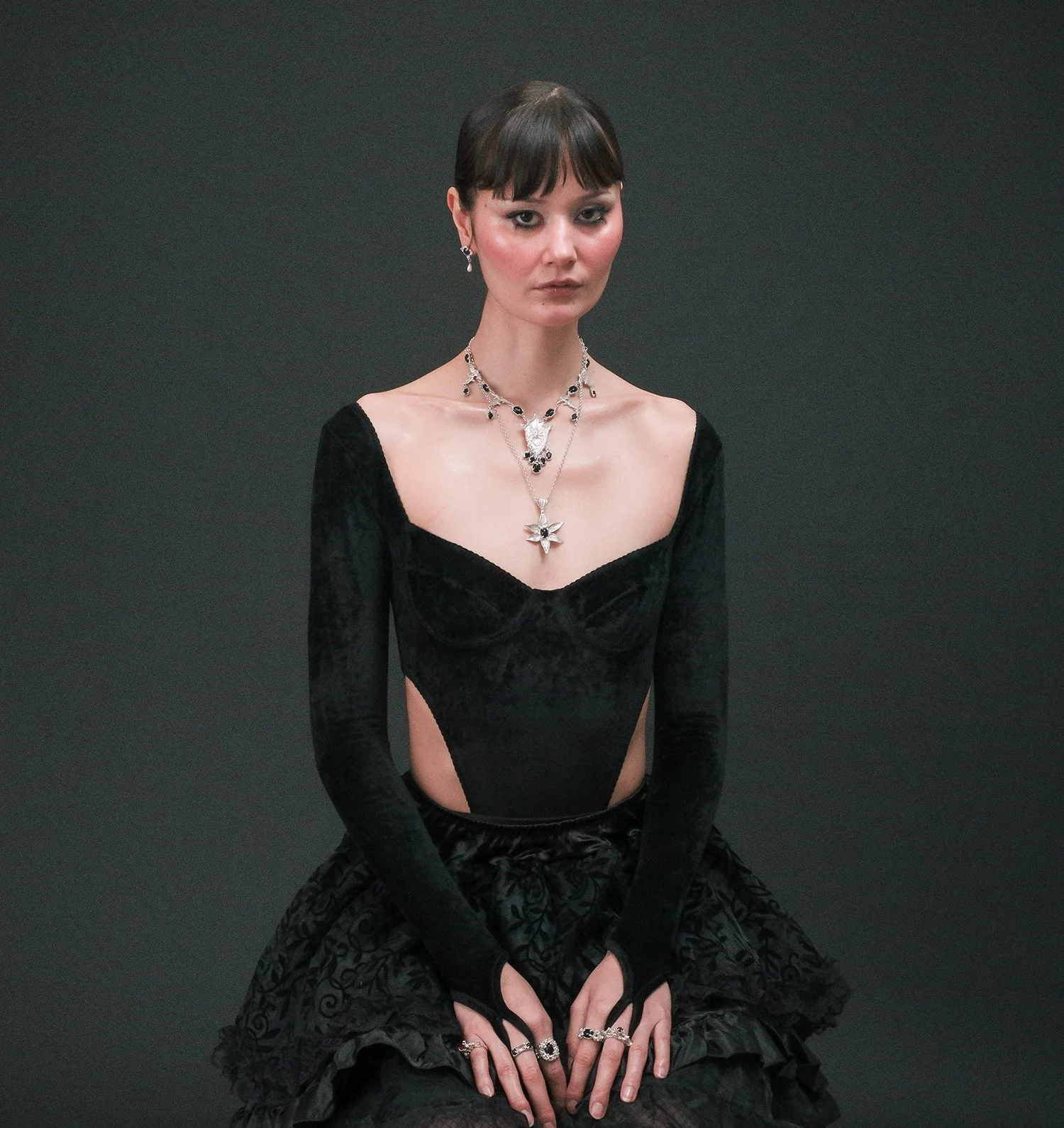
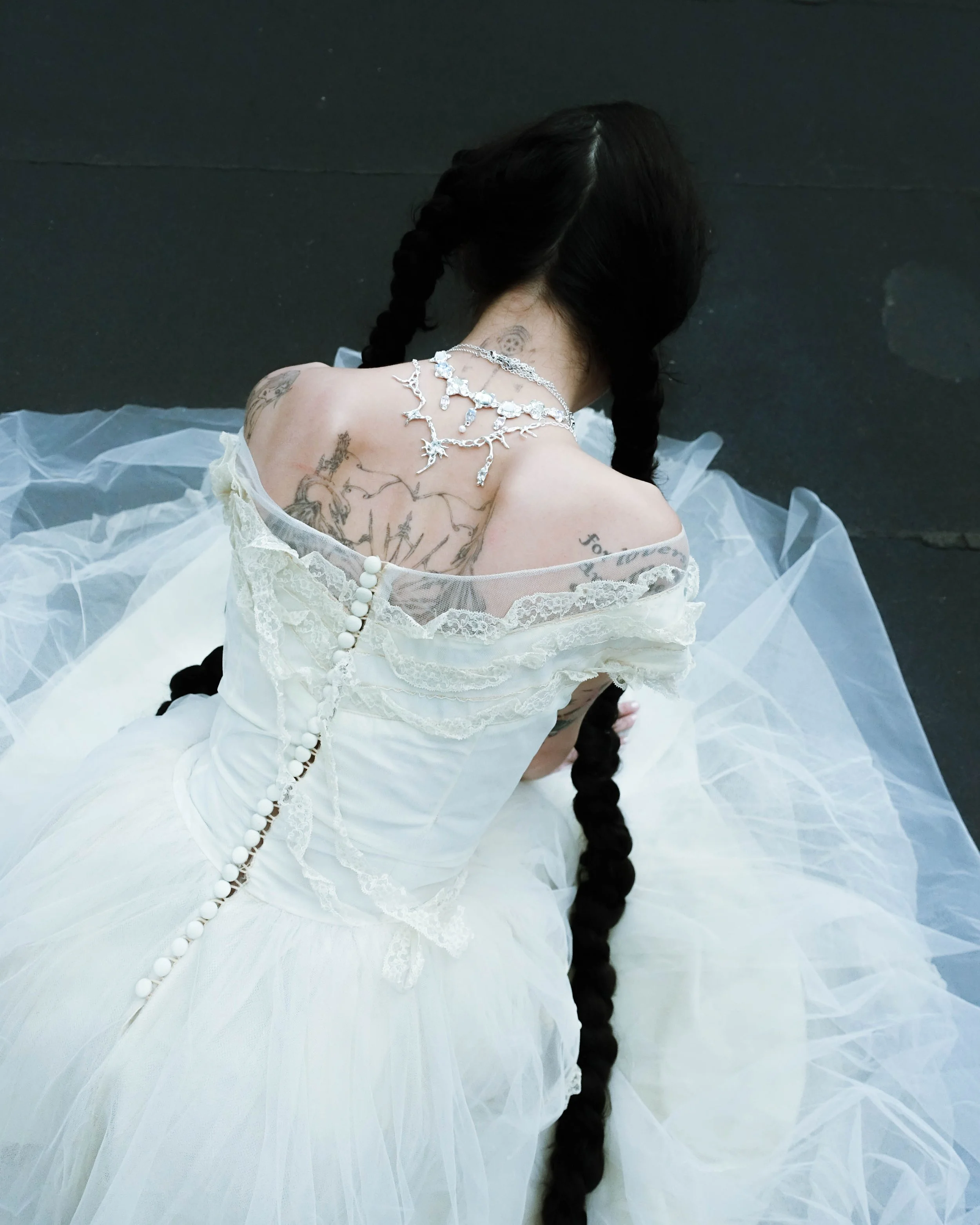
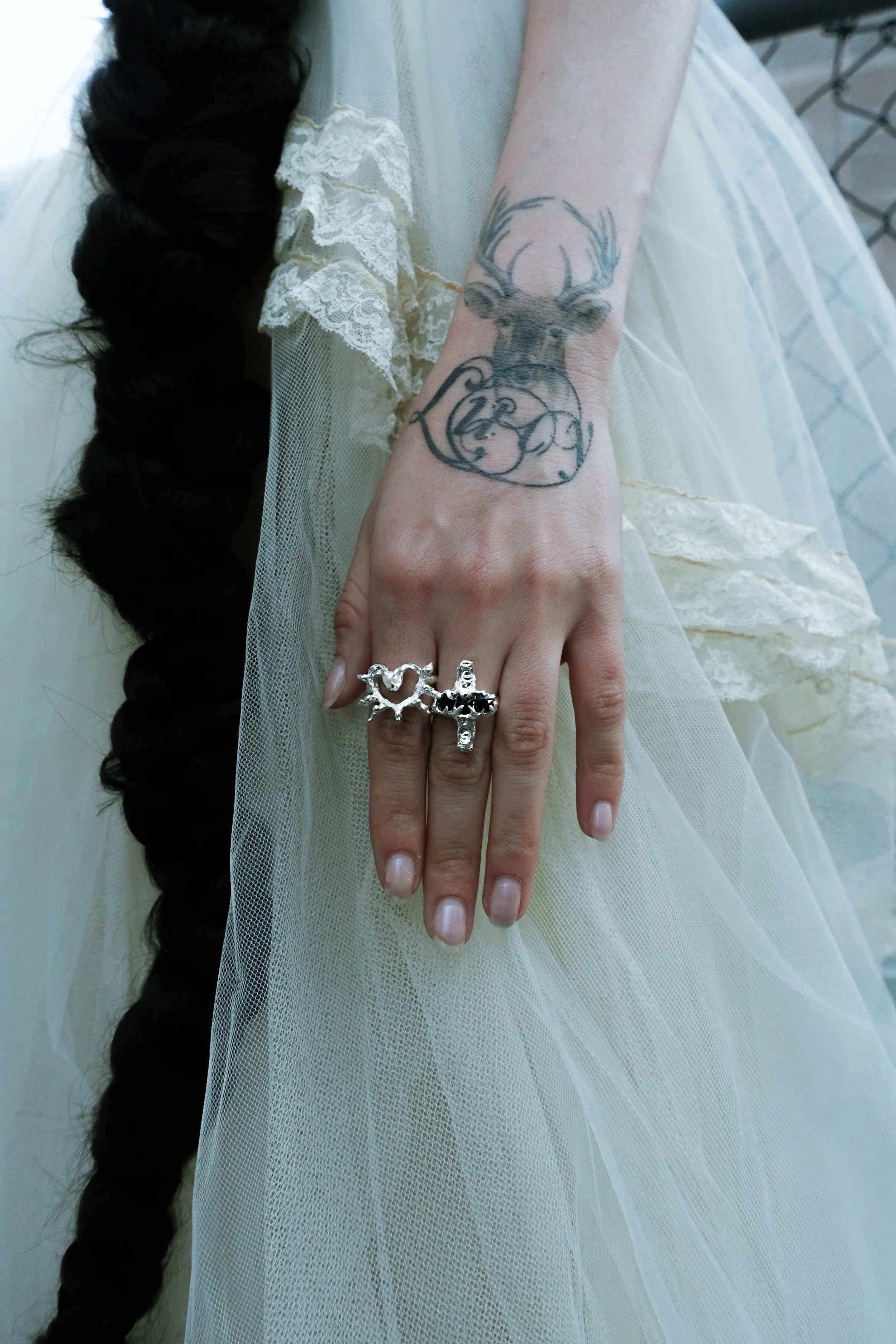
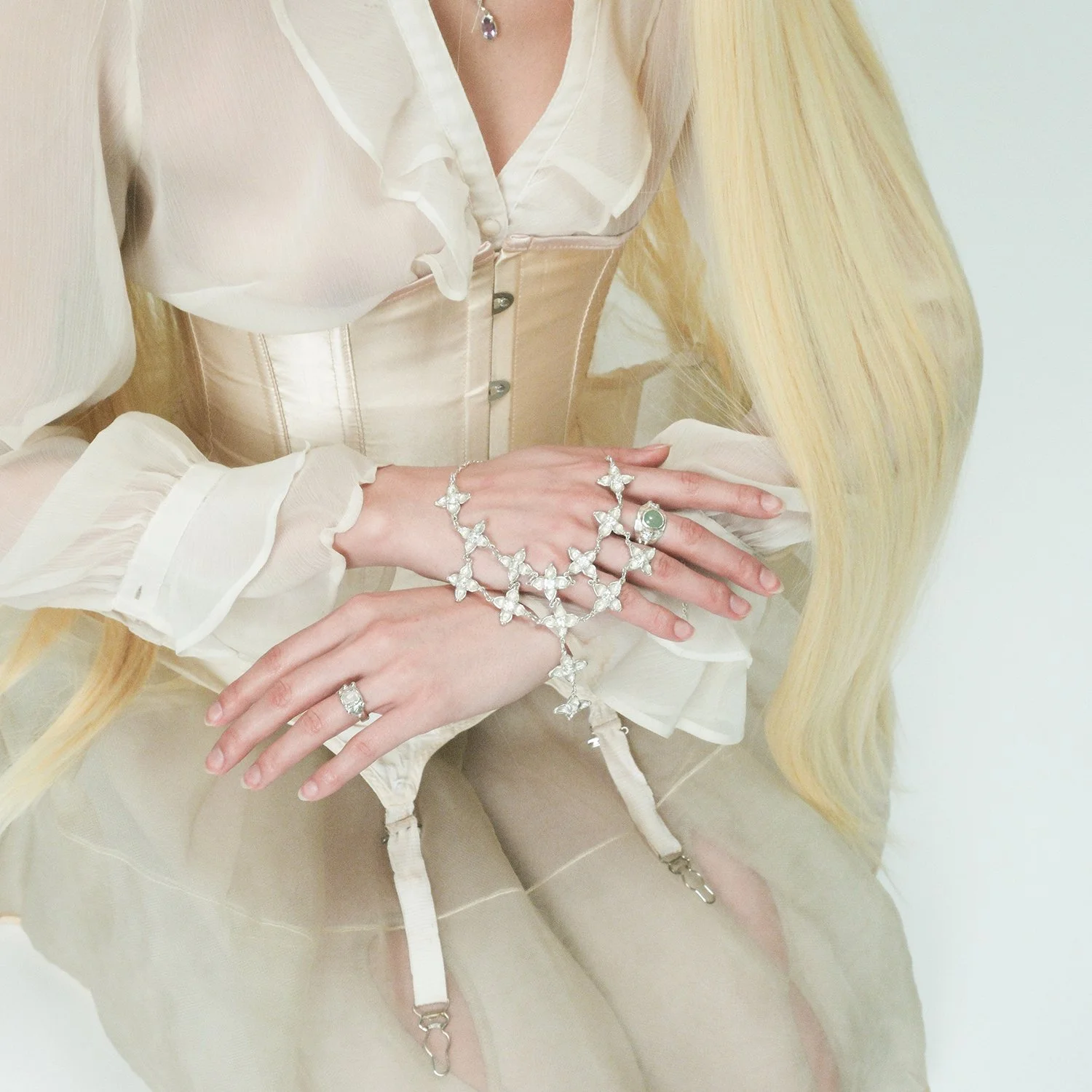
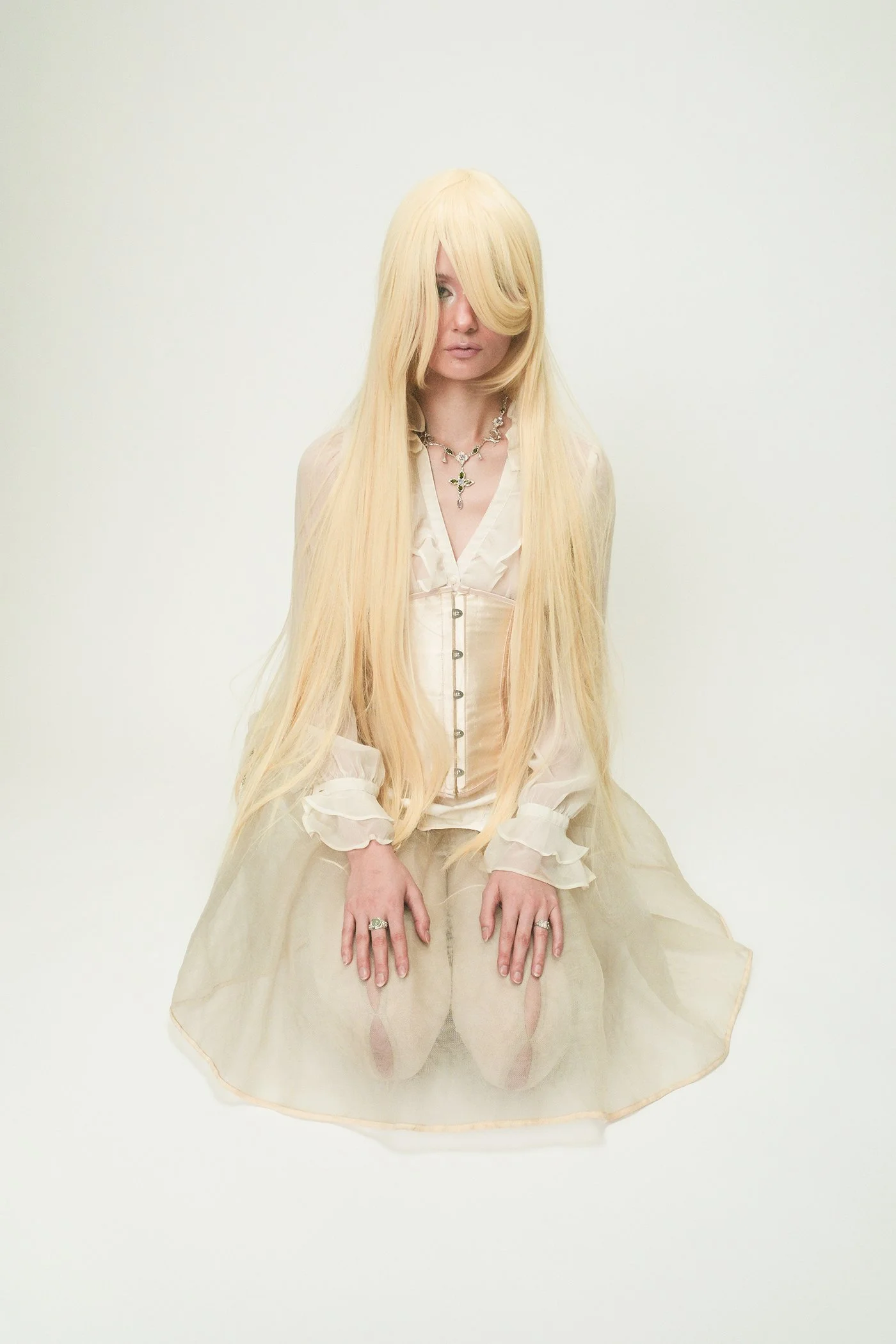
Harlot Hands exists at the intersection of provocation and precision—an emerging label that challenges the boundaries of adornment by transforming jewelry into a language of identity, tension, and quiet rebellion. With a name that immediately evokes contradiction, the brand explores duality: softness versus edge, intimacy versus exposure, tradition versus disruption. Each piece feels less like an accessory and more like a statement—an extension of the wearer’s inner world, crafted with an intentional rawness that resists perfection in favor of truth.
At the helm is designer Jing Feng, whose creative vision is rooted in both introspection and cultural nuance. Feng approaches design as storytelling, drawing from personal experiences, subcultural influences, and an instinctive understanding of form. There’s a deliberate emotional weight behind each creation—an unspoken narrative embedded in metal, texture, and silhouette. Rather than following conventional trends, Feng carves out a distinct visual language that resonates with a generation seeking authenticity over polish.
For GR8T Magazine, Harlot Hands represents more than a rising brand—it signals a shift in how we define luxury and self-expression. In this exclusive feature, Jing Feng opens up about the philosophy behind the label, the tension that fuels the creative process, and the evolving role of design in a world that increasingly values individuality over conformity.
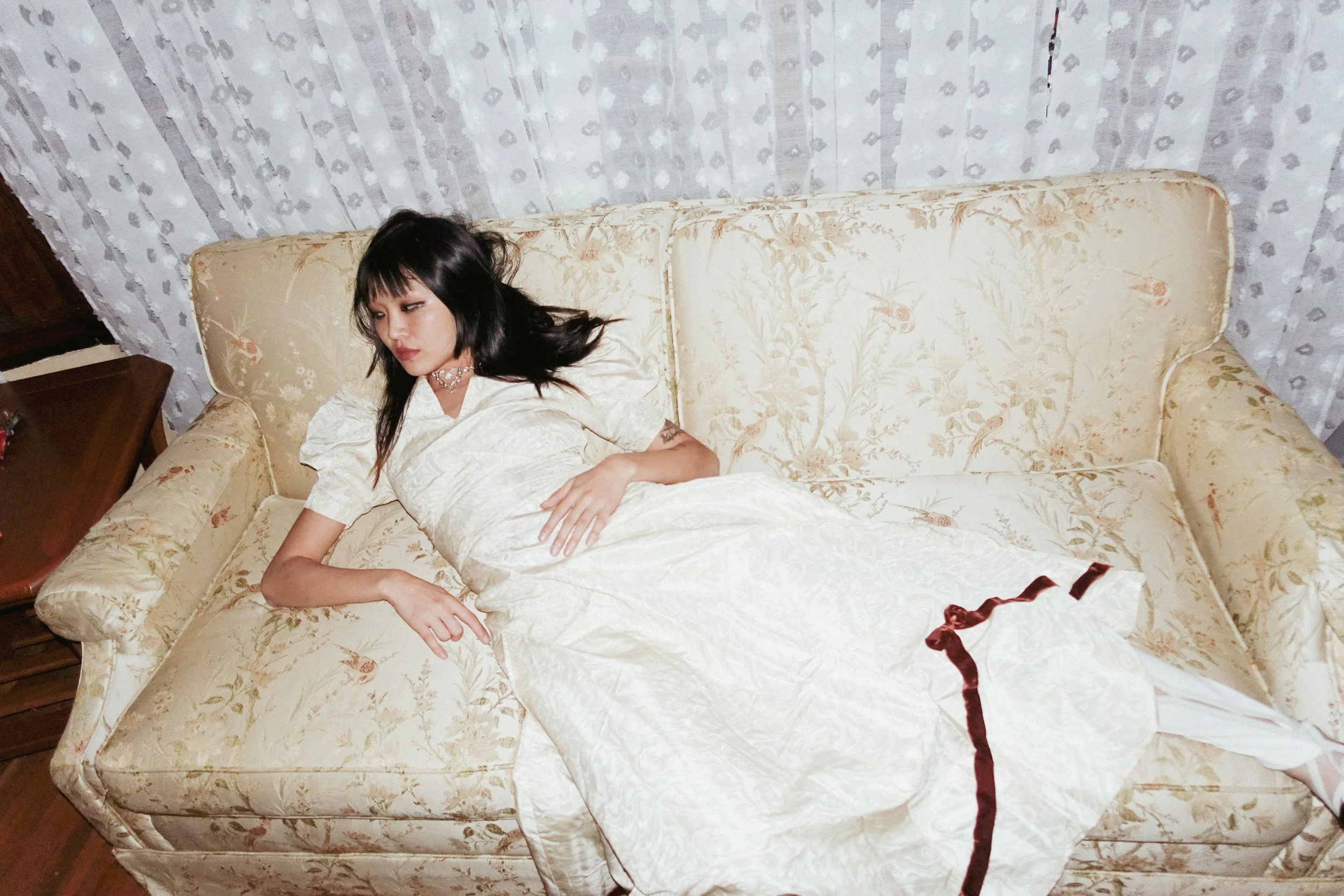
Jing Feng, the Founder & Designer of HARLOT HANDS
“The biggest goal for me is operational standardization, which gives me more room to focus on creativity and sharpening my technical capability.”
As a fine-art trained Chinese-American designer and first-generation immigrant, how has your multicultural experience influenced the "frenetic energy of contemporary femininity" that defines Harlot Hands' aesthetic?
My experience of femininity is deeply tied to digital culture and the psychological effect of growing up inundated with shifting media. As an only child and a first-generation immigrant, I never felt I fully belonged in American or Chinese culture proper and I spent a lot of time alone on the 2010s internet landscape. My youth involved playing online games and creating endless blogs and personas, using the internet as a medium of expression. You can see that energy in my designs—the girl as a shapeshifter across different worlds and characters. It’s a hybridization of identities that is chaotic, messy, sometimes incomprehensible, but ultimately beautiful. Harlot Hands is born from that frenetic need to create yourself when you don't fit into a single, traditional box, when you’ve perhaps been more familiar with difference than belonging.
You treat jewelry as an art medium to imagine different characters and worlds; what was the most significant catalyst that moved you from a fine-art background to becoming a self-taught jeweler?
I started the brand while I was a junior in art school, so everything I was exploring in my art practice was being translated in some way to the jewelry whether it was intentional or not. Initially I just played with upcycled materials and store bought beads and chains, but eventually I wanted to create my own original designs in metal and that unraveled into an entire journey leading up to now. The first ever symbol I created was a spiky butterfly pendant, a hallmark of the brand’s language. It has taken on so many forms since then, and will continue to in the future. That impulse to express something that didn’t have a form yet was the catalyst that drove everything.
The brand's visual language is described as invoking a combination of "fantasy and theater, artifact and costume"—which artists, historical periods, or works of literature have been the most constant source of inspiration for your work?
When it comes to jewelry, one of my biggest inspirations is fashion—I love collecting vintage gowns, dreaming of historical costumes, and playing with different archetypes. I always think a lot about Galliano’s narrative maximalism and how he traverses between things like a Russian princess and shipwrecked marauders. There is a speculative, theatrical fiction at the core of my creativity. This applies to my sculpture and ceramic process as well—building a narrative and creating pieces that act as fragments of a larger world with heroines at the center. I’m also inspired by ancient and medieval art, Eastern and Western mythology, Symbolist poetry, and writers like Lisa Robertson. I look a lot at Victorian, Byzantine, and Georgian jewelry, but am also just deeply influenced by the women in my life and my own personal experiences.
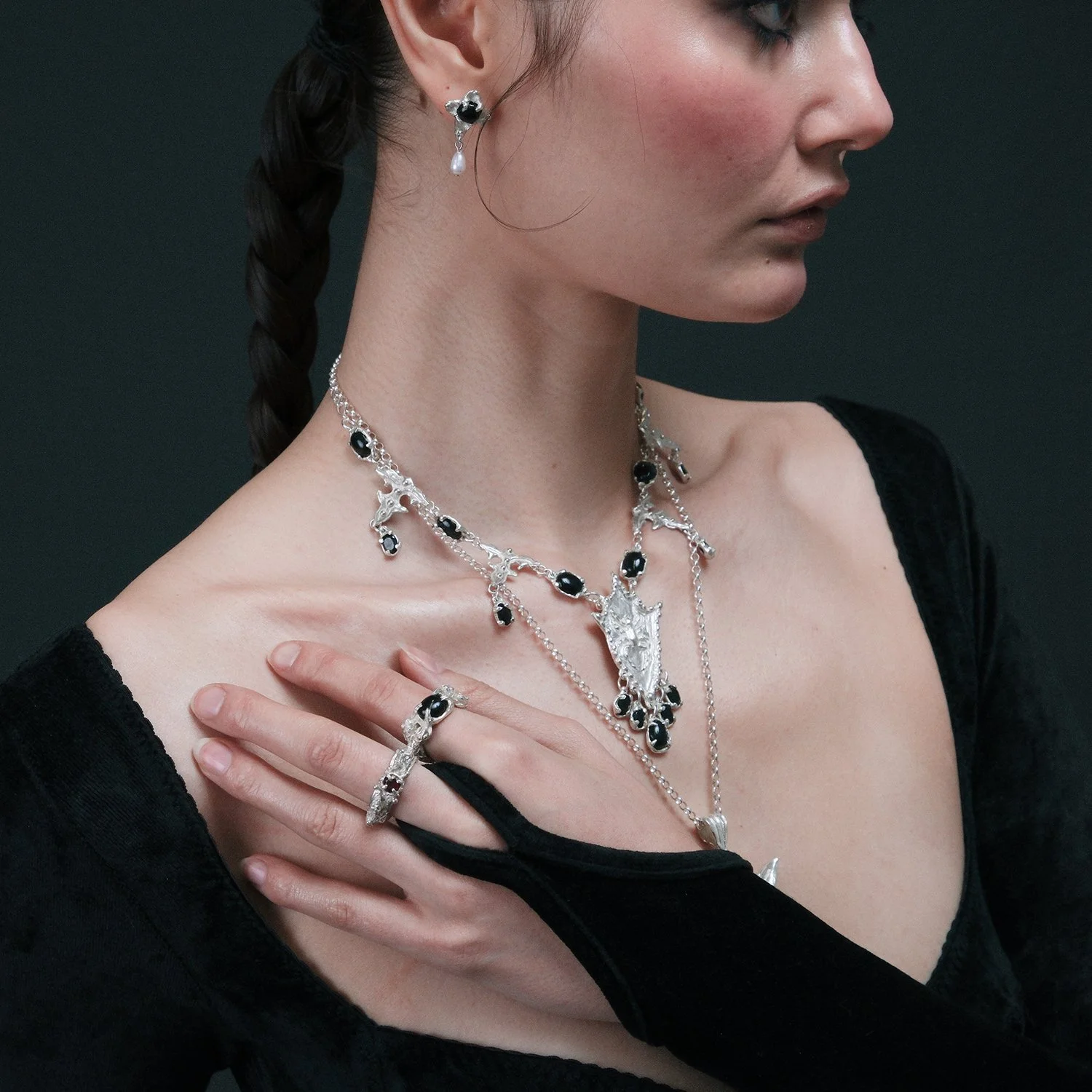
Growing up as a "girl on the Internet" is noted as an influence on the brand's aesthetic. How do you see the digital world and contemporary femininity informing your designs for "contemporary artifacts"?
I was raised by a single mother, who is one of four sisters; women and their strength are the core of my faith system. I view every woman’s life as a legend, and I design jewelry to serve as the 'artifacts' or evidence of that legend. Unlike the lives of the women in my family though, my life has been a chimera of screens and informational excess—a landscape of digital culture forming a new hyperreal. My brain was built by the aesthetic revolutions of the internet, from playing online games anonymously to the evolution of Tumblr and Instagram. Growing up this way skews your relationship with beauty; it can be a harrowing, shifting experience, but it is my history. Harlot Hands is about leaning into that distortion to create yourself over and over again on your own terms.
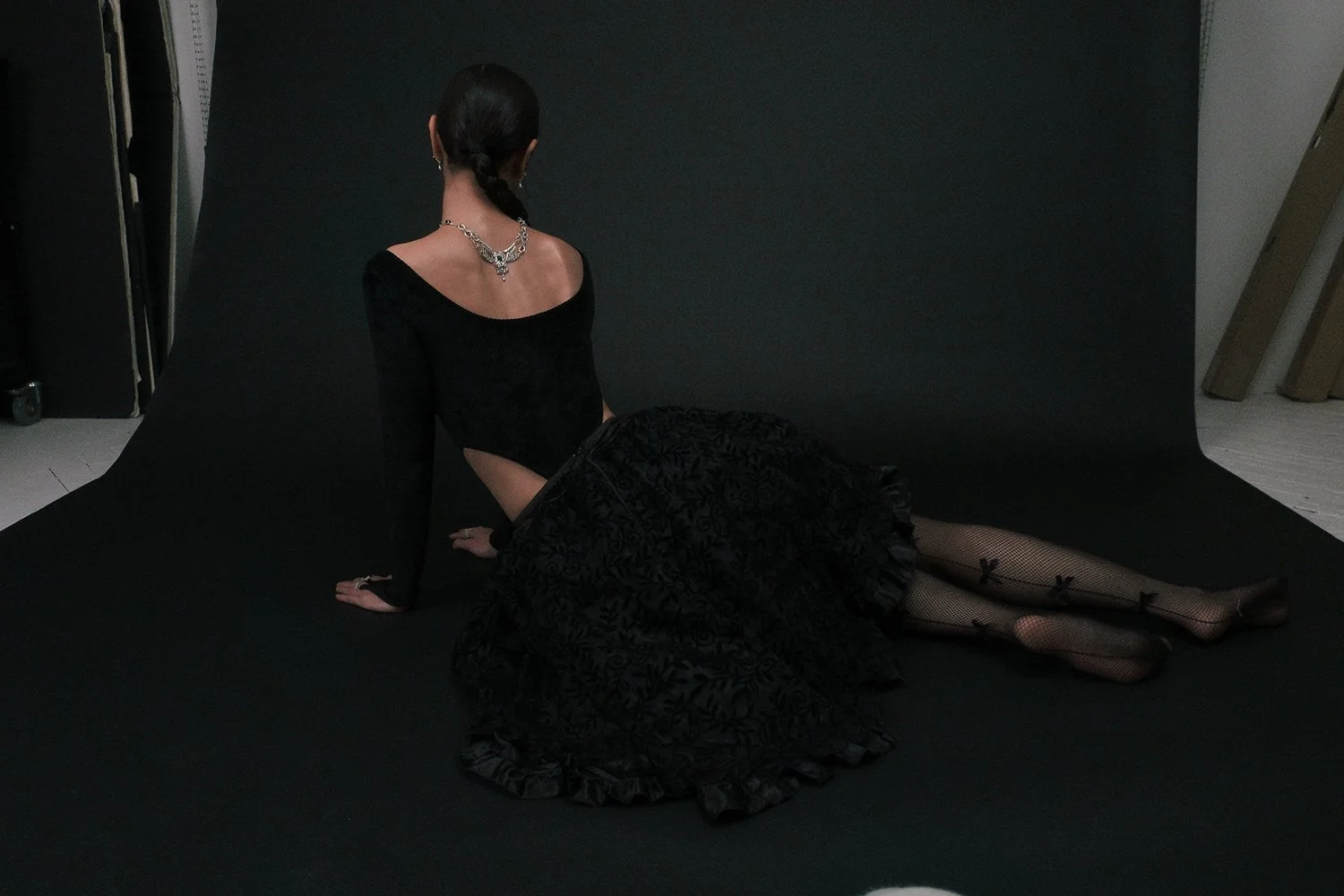
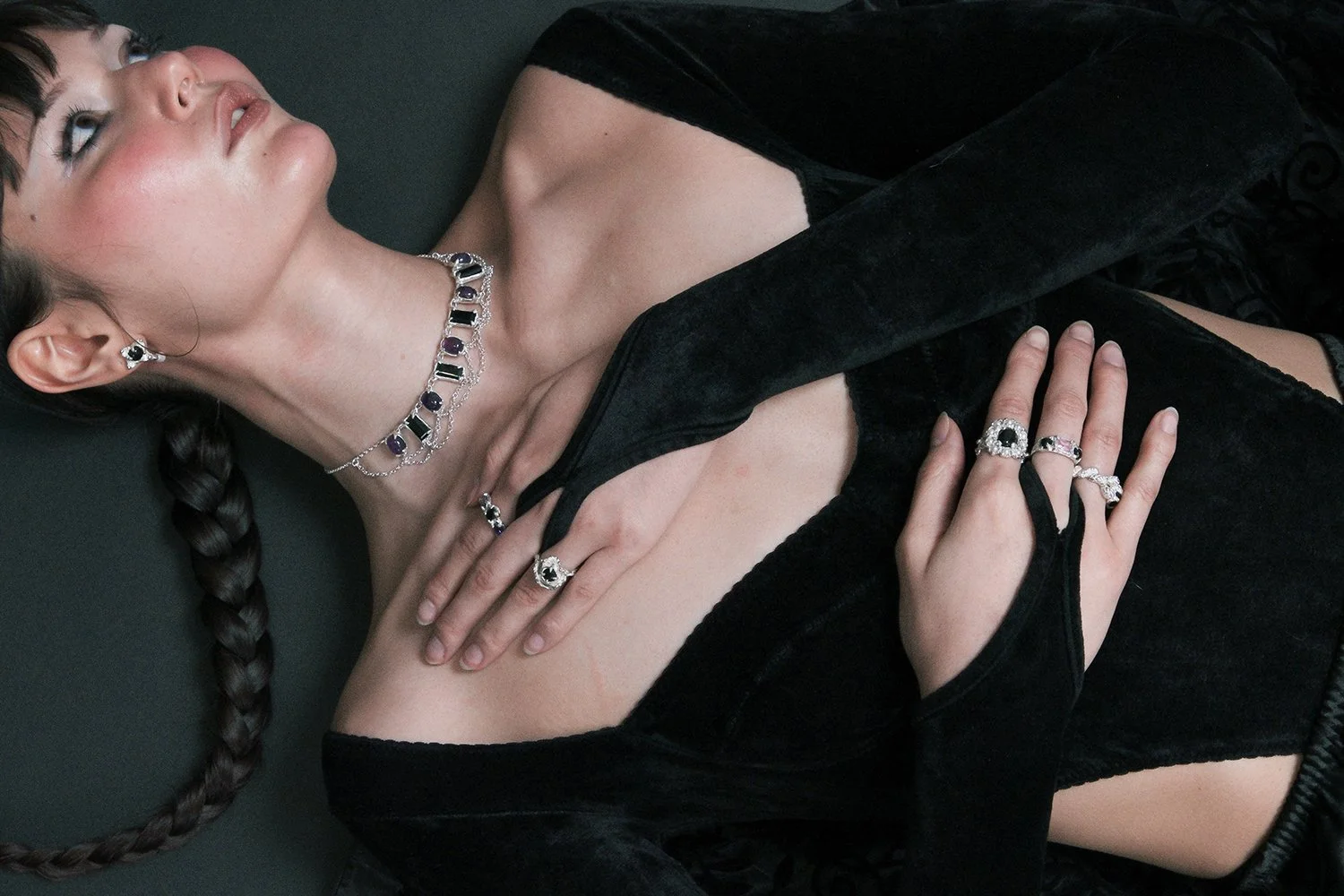
Your 'Arachne and Aurora’ 2026 Limited Capsule investigates the poetic lineage of two tragic heroines. What inspired you to place these two figures—one from Greek mythology and one from European mythology—in conversation with each other?
I was reading Ovid’s Metamorphoses, which is how I became familiar with the Arachne & Minerva story. I really love all stories where women undergo a transformation of some sort. I was thinking about Arachne a lot during the time I saw the New York City Ballet’s production of Sleeping Beauty, and I decided to explore both their stories through this jewelry collection. Of course I loved the costumes, the movement, and set design, especially the overgrown and thorny gates when the kingdom is asleep. I also really love alliteration, and putting their names next to each other just felt right.
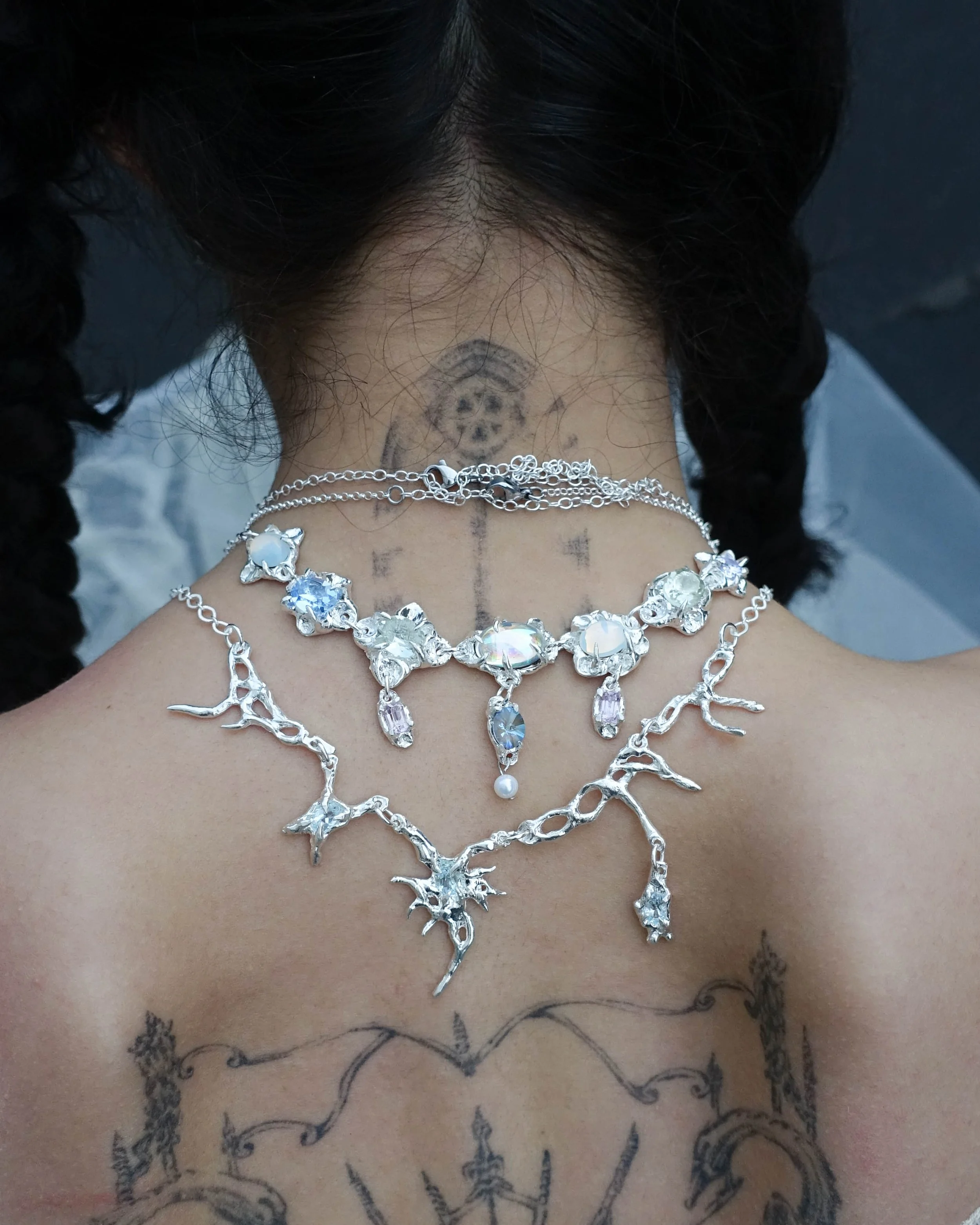
The collection's visual language includes the "wispy, webbed, weaving" forms of Arachne and the "floral configurations and weapon-like relic forms" of Aurora. Can you walk us through the process of translating complex mythological narratives into sculptural jewelry?
For me, it’s natural to always start at themes and feelings, and then the forms eventually emerge. When it’s research based and not just pure, thoughtless, intuition (which I do a lot of), you have more specific images and words already floating around in your head. My distinctive visual language of using bold and sometimes sharp symbolism, fantasy imagery, and organic textures gives me a starting point to building the narrative. Of course with a spider girl and the story of sleeping beauty, you get these contrasting feelings of heaviness and softness, so then I started combining dark and light colors with floral symbols and more bold, insect-like forms. Ultimately, it’s not just about their narratives as separate characters, but the possibility that they might be two sides of the same person.
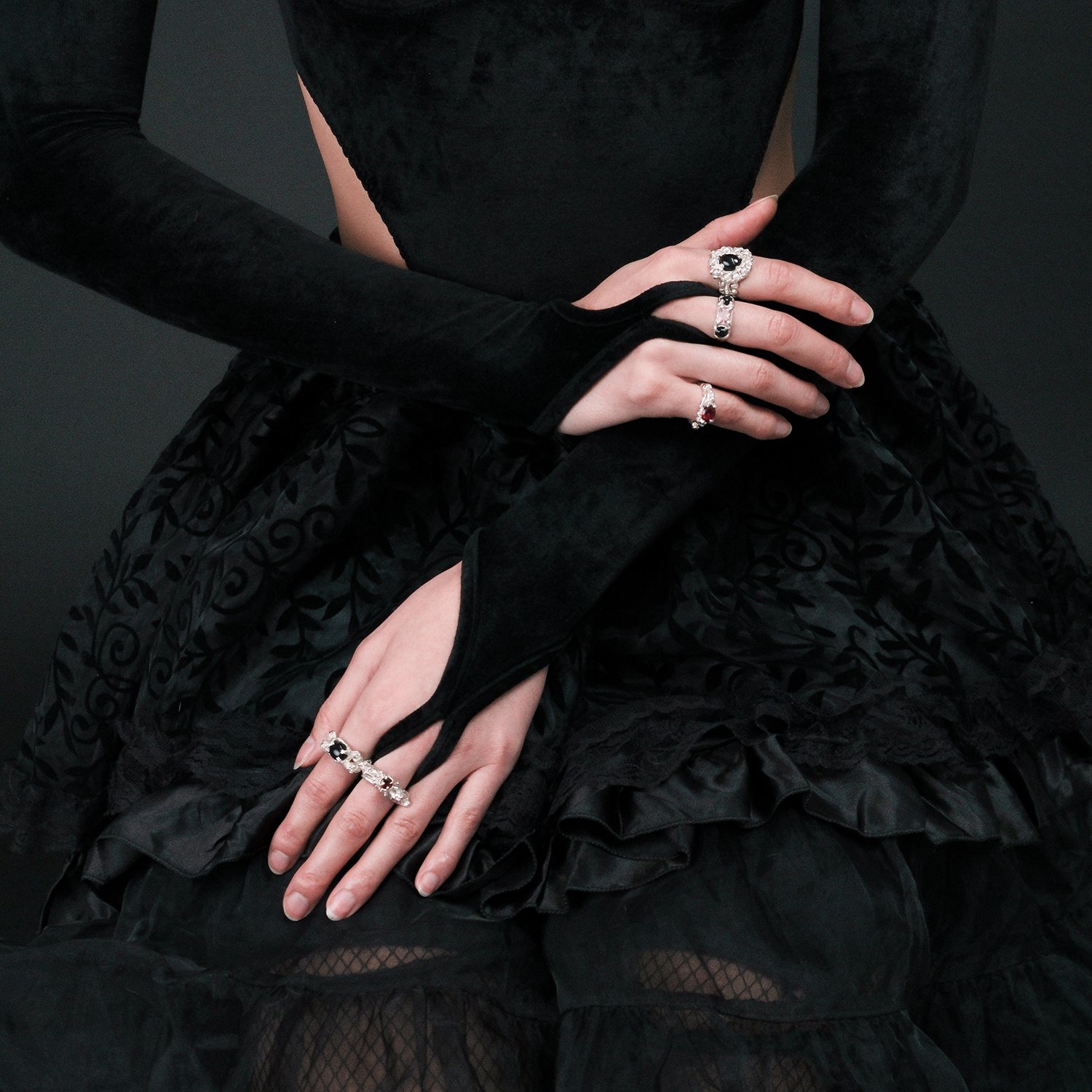
Harlot Hands operates on an artist-led workshop model. How does this artisanal philosophy, which prioritizes working directly with the hand-sculpted material, allow you to approach design from an "alternative perspective" freed from conventional limitations?
My design process has always been defined by an intimate relationship with the material. Since I don’t have a background in jewelry design or traditional training, the process of making a design has always been experimental and unpredictable. Oftentimes if I go in with an idea it ends up becoming something else, or I let the process dictate the design completely, starting with just a shape or a gemstone and then letting it transform When I started, I didn’t really know what I was doing and ended up making up a lot of my own techniques, which hugely shaped the design language. I realized that there really isn’t a “correct” way, and sometimes outside of that convention is where magic happens.
The collection aims to position both Arachne and Aurora as "wielders over their own fate," creating their own agency. What is the core message of strength and empowerment that you hope the wearer takes away when adorning themselves with these pieces?
Jewelry can capture the soul of who you are; it can contain the core of a look and a feeling. When I talk about the 'art of character,' I’m thinking of Nina Auerbach’s description of the self as a potential for metamorphosis—the idea that a person of character is an artist over their own human nature. That is exactly how I want the wearer to feel: like an architect of their own nature, untethered from anyone else’s expectations of how they should act or look. Truth is often stranger than fiction, but I believe that sometimes, the fictions we create for ourselves are more true than reality.
Since launching into the international market within a year of inception, Harlot Hands has secured collaborations like the FW24 collection with Heaven by Marc Jacobs. How do these major collaborations help you to communicate the brand's "subversive, deviant romanticism" to a wider audience?
The collaboration with Heaven came across really naturally because we were stocking at Heaven’s in store locations in Los Angeles and London. A big part of Harlot Hands has roots in subcultural expressiveness. I would say since I am Gen Z there’s that natural influence in everything that I do. Heaven having a language of underground styles and niche references spoke to an audience that understood the language of Harlot Hands because they inherently value individuality over convention, allowing us to expand our own message surrounding material subversion and darker yet playful romantic themes to a larger stage.
Being named a 2026 Fashion Trust US Awards finalist is a significant achievement. What do you see as the next major boundary you intend to push in the independent jewelry design space?
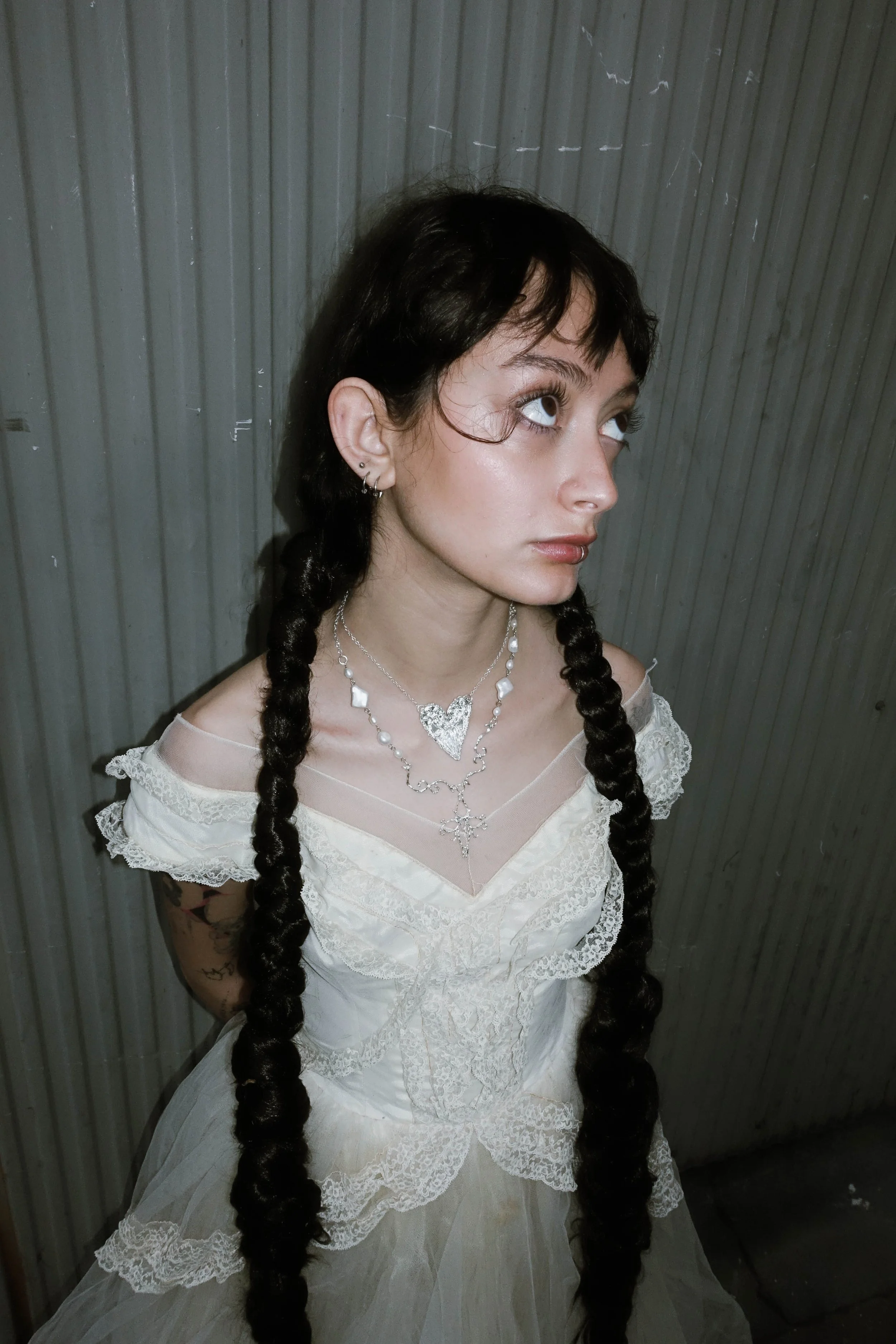
The boundary I want to push is creatively and conceptually driven. I’m fine-art trained so there’s a lot of that theoretical thinking behind my work–using jewelry as a vehicle to not only explore identity and selfhood, but to embody infinite self-creation. I want to push that message in the jewelry design space, that it can be a fashion and art based medium using high quality materials that’s adaptable to who we are today. Jewelry has always been a sacred, eternal object of meaning, passion or devotion. And what influences what is sacred to us now? Something entirely different than what was 100 years ago, even 50 years ago. Yet that same instinct for symbolic treasure stays with us. That’s why my designs are chimeric references and creations of both old and contemporary attributes, an assemblage. My experience with Fashion Trust allowed me to reflect on my long-term mission, and the importance of business acumen in accomplishing that.
With the brand's commercial expansion including independent retailers like Retail Pharmacy NYC and APOC London, what is your strategy for maintaining the "artisanal philosophy" and commitment to sustainability as production scales?
Right now we work with local foundries for casting, and design and finish every piece in our studio by hand. As production scales, we are still able to use this model without relying on mass production which is really important to us. Working with retailers on consignment allows us to use our made-to-order model, which is great for sustainable production and reducing waste. But even with wholesale production, we are able to continue sustainable processes because we are involved in every part of the production. I’m grateful to the retailers giving independent and emerging designers that prioritize handmade, artisanal products visibility.
Looking ahead, what is the single biggest goal for Harlot Hands in the next five years, and how do you plan to achieve it?
The biggest goal for me is operational standardization, which gives me more room to focus on creativity and sharpening my technical capability. I never expected to work with jewelry, it was a hobby based discovery that has turned into a lifelong journey. Because starting my business was an accident, we’ve had to learn a lot on the way as we go and didn’t know initially how to effectively set up operational infrastructure. Having that architecture means not just more creativity, but connecting with your audience and building community in a meaningful way. So yeah, visibility and connecting with my audience is a big part of that goal too. GR8T
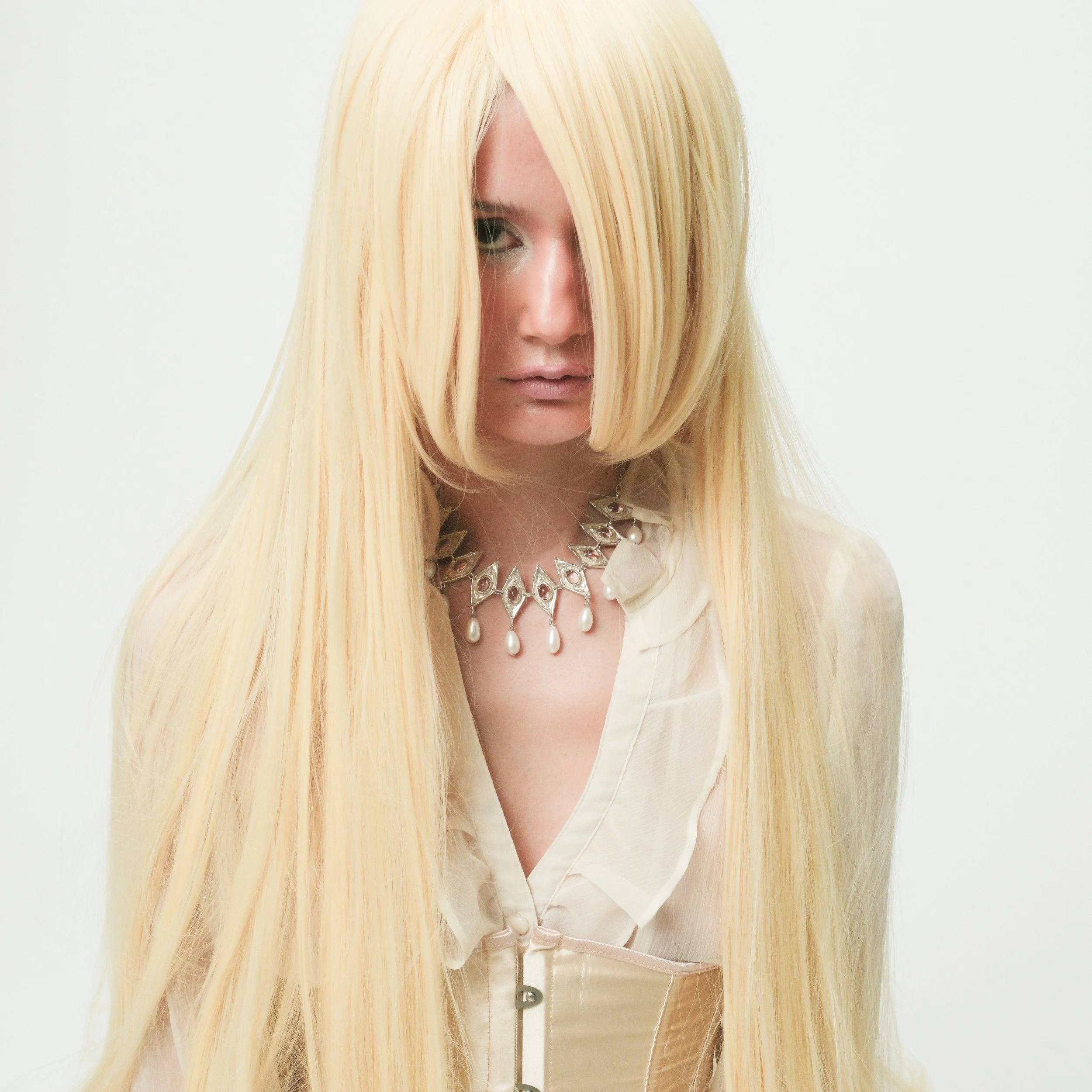
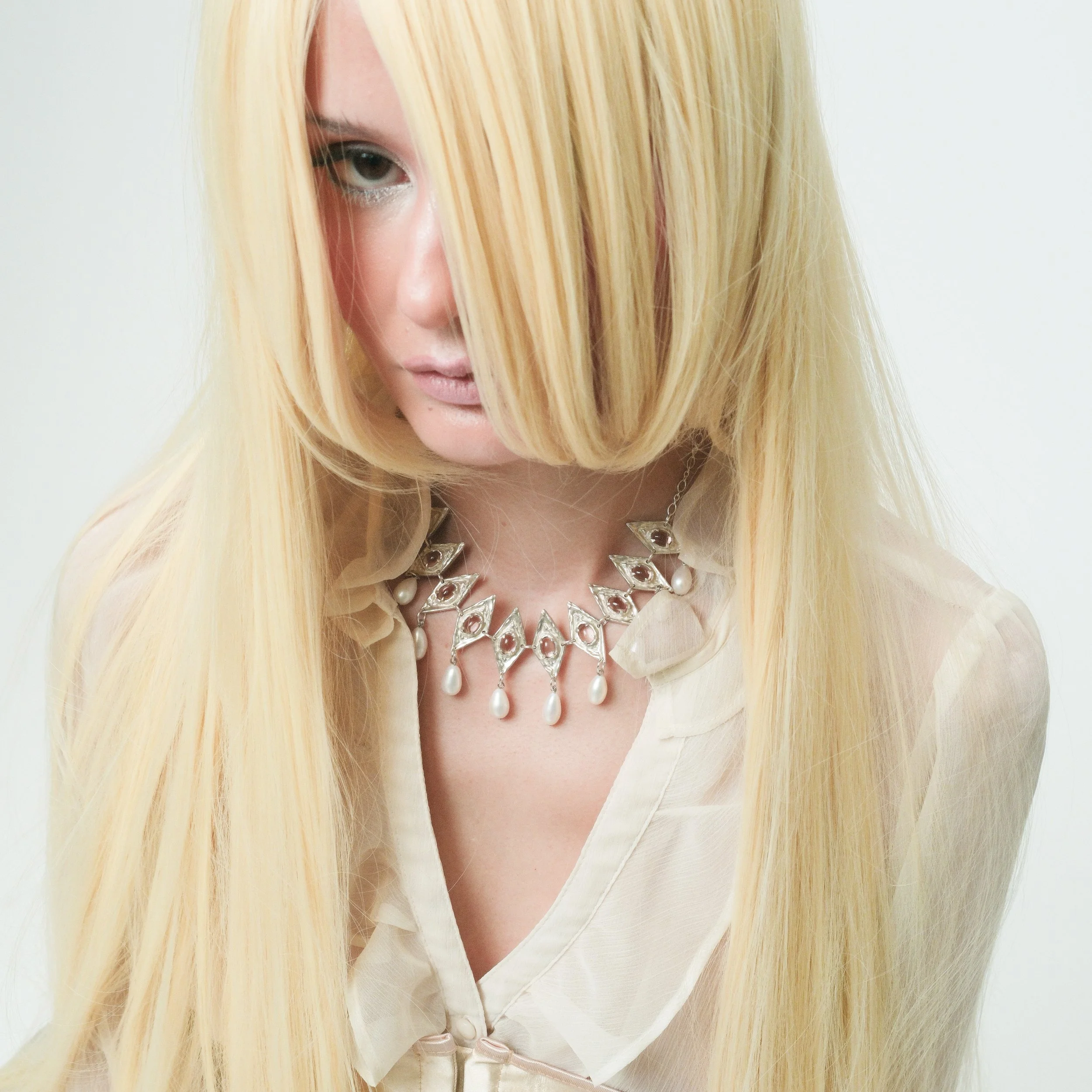
Photos Courtesy of HARLOT HANDS
Instagram: @harlothands
Buy Online: https://harlothands.com