
Feature Highlight + Interview: Edison Chen, The mind behind CUDIS the next generation wearable wellness
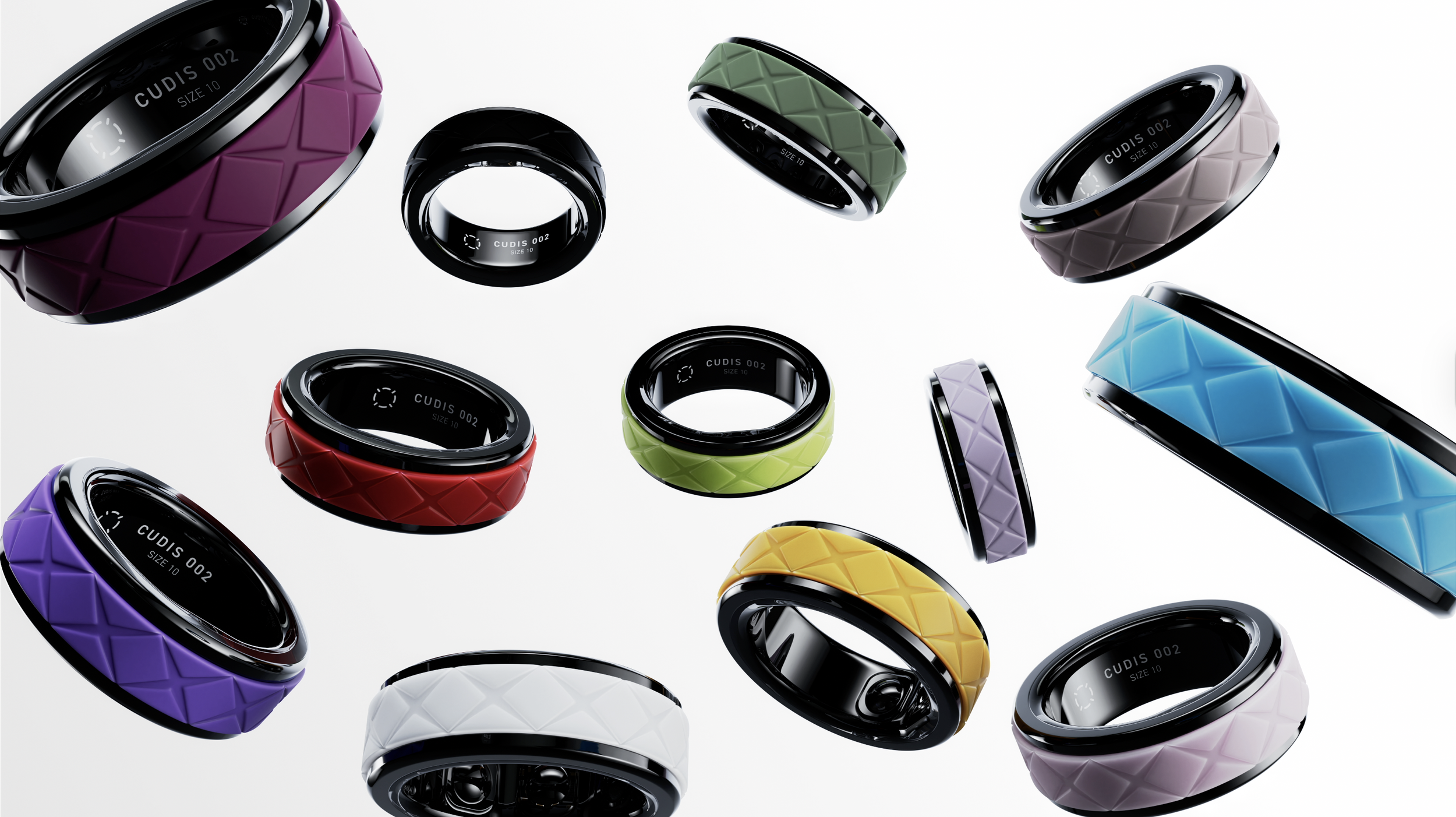
Bridging the frontier of cutting-edge technology and the future of human longevity. Today, GR8T Magazine features CUDIS and Edison Chen, the visionary entrepreneur who is fundamentally disrupting the multi-billion-dollar wearable wellness industry. With a formidable background that spans from successfully launching and exiting his first traditional tech startup in 2016 to managing a $200 million venture capital fund, Chen has spent his career ahead of the curve. Now, as the Founder of CUDIS, he has masterfully fused his deep expertise in data infrastructure and AI with a profound personal passion for health and fitness. Pioneering the next generation of biometric tracking, Chen is the architect behind the CUDIS Series 002 — a sleek, titanium smart ring that harnesses the power of AI to put the ownership, privacy, and real-world value of your health data back where it belongs: in your hands. Join us as we explore the mind and the mission behind the ultimate wearable for the modern age.
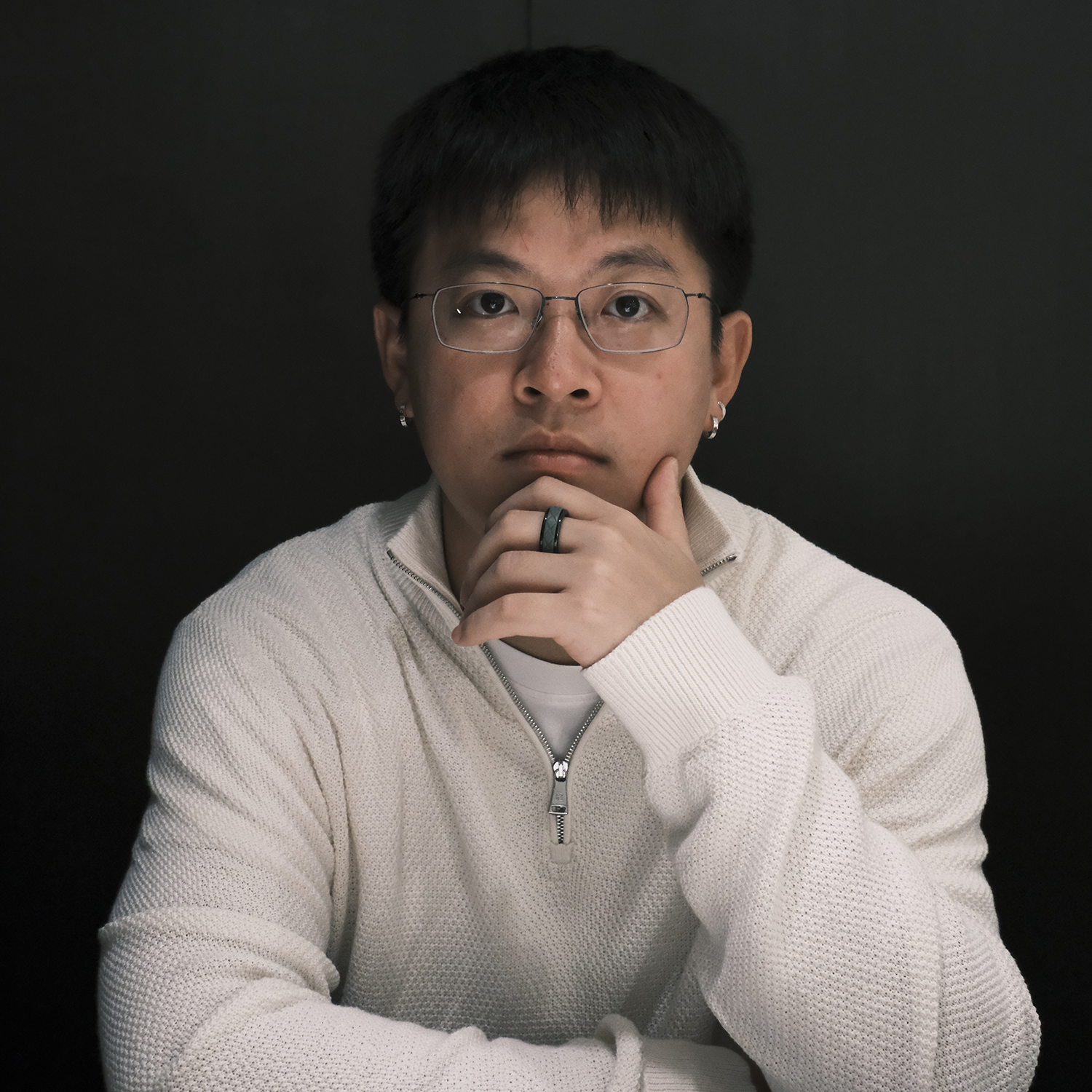
Edison Chen, the Founder of CUDIS
You started your entrepreneurial journey in the traditional tech space—selling your first startup in 2016—before managing a $200 million VC fund. What was the exact catalyst that made you pivot from investment into the wearable wellness space?
Honestly, it was a personal crisis more than a business decision. I was running a $200 million fund at the peak of the bull run in 2021, and on paper, everything looked great. But I was burning out. Poor sleep, high stress, lack of training. I started paying more attention to my own health data and realized how broken the existing tools were. They'd tell me I slept badly but give me nothing actionable. That gap, between data and real change, was so obvious to me. And coming from a world where I'd seen AI can easily bring more insights, customizable, and actionable advice to everyone, I thought: this is exactly what we need. That's when I walked away from the fund and went all in on CUDIS.
CUDIS sits at a rare intersection — personal health data and AI-powered coaching. How did your passion for fitness and your background in data infrastructure eventually collide to make CUDIS a reality?
The concept of giving people real ownership over something valuable has always driven me. In the tech world, we figured out how to let people own digital assets. Health data is the most personal, valuable data that exists, and yet people have been handing it over for free to companies that monetize it without them seeing a cent. The collision happened when I asked: What if your body's data actually worked for you? Yours, secure, and generating real value in your life? That's the foundation CUDIS was built on.
You’ve assembled an incredibly diverse core team with backgrounds from giants like Google, Samsung, and Nike. How does this intersection of consumer electronics, sports, and AI shape the internal culture and product development at your company?
Each of these companies is a leader in its own field, and when you bring that level of expertise together under one roof, you get a team that's multidimensional in a way that's really hard to replicate. We have people who know how to build bulletproof hardware, people who know how to create products that feel premium and desirable, people who live and breathe AI and machine learning, and people who deeply understand how to design a rewarding system to nudge users into a healthier lifestyle. CUDIS sits at the intersection of all of those disciplines. So having genuine depth in each one isn't a nice-to-have, it's the whole game.
Building hardware is notoriously difficult, and many health tech companies opt for purely digital solutions. Why was a physical product non-negotiable for you?
Two reasons, and they're connected.
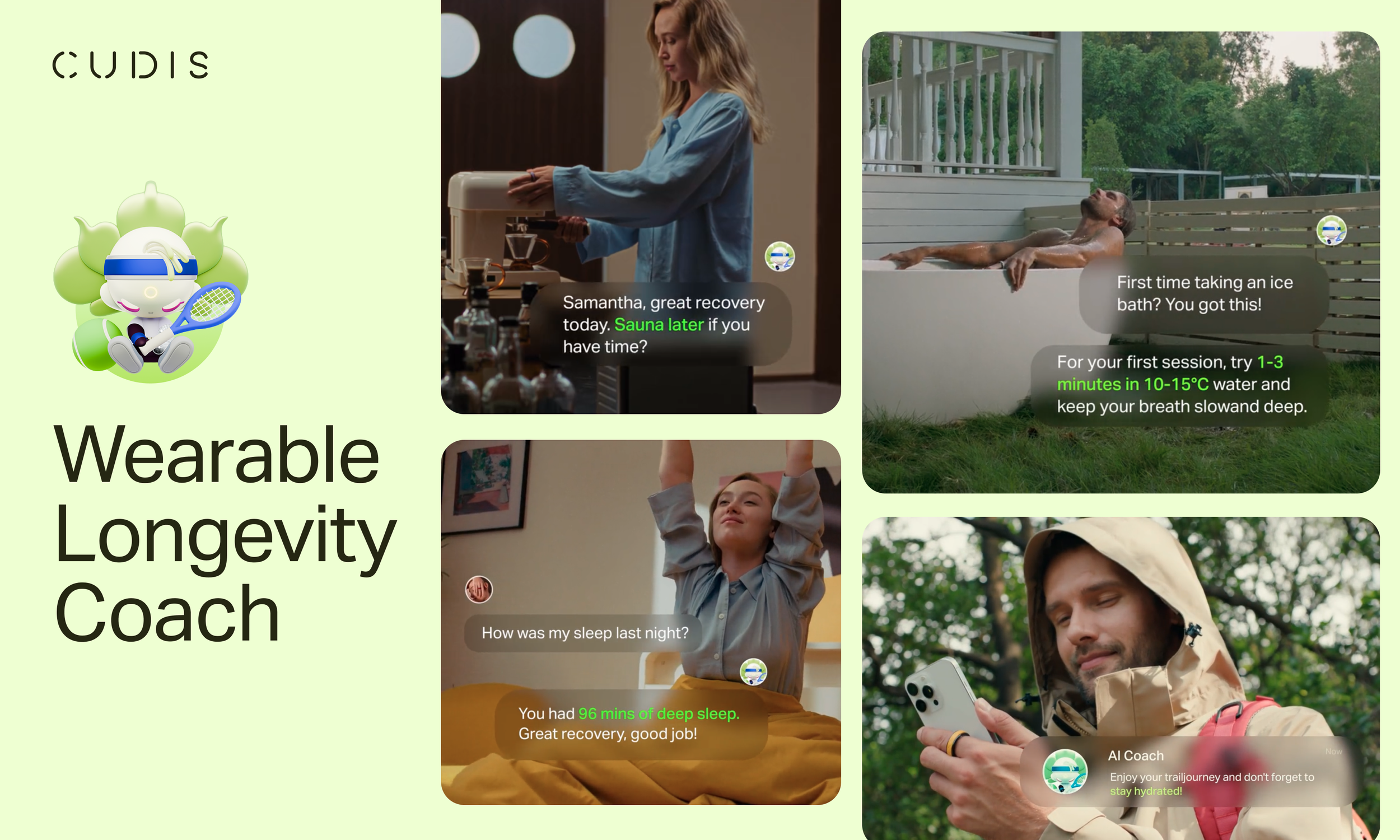
First, behavior change doesn't happen in the abstract. You can build the most elegant AI platform in the world, but if people aren't actually moving their bodies, sleeping better, and making different choices, nothing changes. The ring is what makes it real. It's on your body 24/7, it's learning you continuously, and it's the thing that creates the data that makes everything else possible. Without hardware, CUDIS is just another app. With it, it's a genuine health companion.
Second, and this is something I feel strongly about: the best technology is the kind you don't have to think about. We built a secure data infrastructure on the backend using blockchain technology that ensures your health data is yours, protected, and never monetized without your knowledge. But you shouldn't have to understand any of that to benefit from it. You just put on a ring that looks good, tracks your biological age, and tells you what to do about it. The sophistication lives underneath. What you experience is something simple, beautiful, and useful.
That's always been the goal: make the most advanced health technology feel like the most natural thing in the world to wear.
Looking back at your journey from managing a consumer technology fund to innovating in the health space, what is one personal daily habit or biometric metric that your own CUDIS ring has completely changed for you?
Sleep does matter and becomes the most important part of my life. I was not really paying attention to my sleep before my 30s, I’m good at having deep enough sleep and my body always was easier to recover from when I was during my 20s. However, when I got into my 30s, I can really feel my body started taking more time to recover with slower metabolism. Sleep becomes more important than ever. And when it comes to sleep, personally I think Sleep Consistency is way more important than sleep duration. I genuinely thought I was getting enough sleep. But the ring showed me that even a one-hour variance in when I went to bed was dramatically affecting how I felt and performed the next day. My HRV, my energy, my focus … all of it was tied to that one variable I wasn't paying attention to. Once I saw that pattern clearly in my own data, I fixed it within two weeks. My biological age score dropped by almost a year in the first month. That's the thing about having real data about your own body, as you can't unsee it. And once you can't unsee it, you change. That's the whole point.
A core philosophy of CUDIS is that “health data should belong to users”; How does your model challenge the traditional approaches of competitors who have built billion-dollar businesses extracting user data without sharing the profits?
The traditional wearable model is: charge the user for the hardware, charge them again monthly for the subscription, then quietly leverage their data for advertising or pharmaceutical research. The user is paying twice and getting nothing from the third transaction. We flipped that entirely. One payment. No subscription. And not only do we not sell your data, but we also reward you for generating it through our Health Points rewards system. We're betting that the company that treats users as partners, not products, will win long term. I genuinely believe that.
In an increasingly crowded market of smart wearables, you've made a deliberate choice to prioritize data ownership and AI infrastructure over the typical subscription model. How does that fundamentally change the relationship between the consumer and their technology?
Most technology is designed to keep you dependent on it. You open the app, you get a number, you come back tomorrow for another number. There's no real transfer of knowledge or capability. What we're building is different. The AI is designed to make you smarter about your own body over time: not just tell you what to do, but help you understand why. Eventually, you start making better decisions instinctively, because the patterns the AI surfaced have become part of how you think about yourself. That's a fundamentally different relationship between a person and their technology. We're not trying to make you reliant on CUDIS. We're trying to make you better with it.

The CUDIS wellness community - Los Angeles Launch Event
You've spoken about CUDIS as a longevity platform with an ambitious goal of helping people live well past 100. How does the AI coaching and rewards system actively contribute to extending not just lifespan, but healthspan?
Most people think of longevity as something you address later in life. CUDIS is built on the opposite premise that the decisions you make in your 20s, 30s, and 40s are what determine how you feel at 70, 80, and 100. The AI coach compresses the feedback loop on those decisions dramatically. Instead of finding out decades later that your sleep habits were accelerating your aging, you find out now, and you get a specific plan to reverse it. Add the social accountability of community challenges and the curated health related products and services as the rewards of Health Points, and you have a system that makes doing the right thing today feel immediately rewarding. That's how you move the needle on a healthspan.
We are seeing a massive cultural shift in how people view digital privacy. How do you balance providing hyper-personalized AI coaching with ensuring that a user’s intimate biometric data remains completely anonymized and secure?
This is something we think about at an architectural level, not as an afterthought. The AI coaching is personalized to you, but the underlying data that trains and improves our models is anonymized and aggregated. Users control what they share, what stays private, and who can access it. On-device processing handles sensitive computations where possible, so raw biometric data never has to leave your phone unencrypted. The blockchain layer gives users a verifiable audit trail of exactly what's happened with their data. Transparency is the only real answer to the privacy question, as you have to be able to show your work.
CUDIS is being positioned as a next-generation health intelligence platform. What does the full realization of that vision look like five to ten years down the line?
Imagine a world where your ring continuously monitors your biology, your AI coach proactively connects you to the right provider before a problem becomes a crisis, and your consistent healthy behavior has generated enough value to cover most of your wellness expenses, including supplements, telehealth, recovery sessions, and even insurance reductions. The health data generated across millions of users becomes one of the most valuable longevity research datasets ever assembled. And the people who built it, the users, are recognized and rewarded as stakeholders in that. That's the ten-year vision. Health intelligence that works for you, not the other way around.
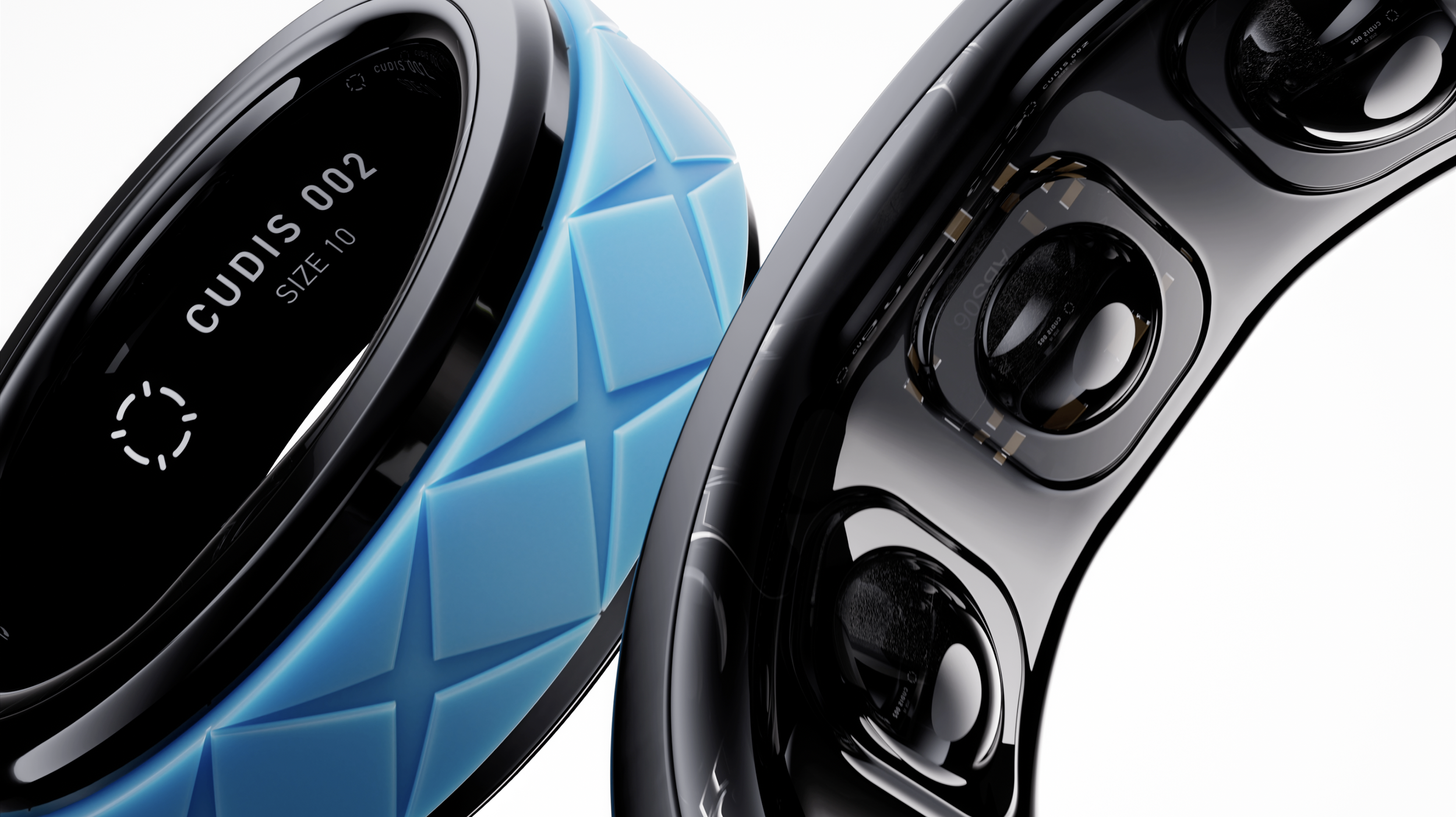
The new CUDIS Series 002 ring is remarkably lightweight at just about 3 grams and crafted from titanium. From a design and engineering perspective, what were the biggest hurdles in packing such advanced biometric sensors into such a sleek, aesthetically pleasing form factor?
This was honestly one of the hardest problems we solved, and it started with a very simple conviction: if it doesn't feel good to wear, people won't wear it. And if they don't wear it, none of the technology matters. So comfort and aesthetics weren't secondary to engineering. They were equal priorities from day one.
Titanium was non-negotiable from the start. It's incredibly strong, hypoallergenic, and has a weight-to-strength ratio that nothing else matches at this scale. Getting the sensors (e.g., heart rate, temperature, blood oxygen) to fit inside a 3-gram form factor required months of iteration. Heat management was a major challenge. The sensors generate warmth, and your finger isn't a great heat sink, so we had to engineer that very carefully to ensure both accuracy and comfort. Battery life in a ring is brutally constrained compared to a watch, so getting to 10 days requires both hardware optimization and software that's intelligent about when and how sensors activate.
But beyond the engineering, our new patented design with the interchangeable bands was a design decision as much as a lifestyle one. We wanted the ring to feel like something you'd actually want to put on in the morning, the same way you think about what you're wearing. Twelve colors wasn't arbitrary. It was about making sure this fits into your life, your wardrobe, your identity. That's when a piece of technology stops being a gadget and starts being something you reach for every day.
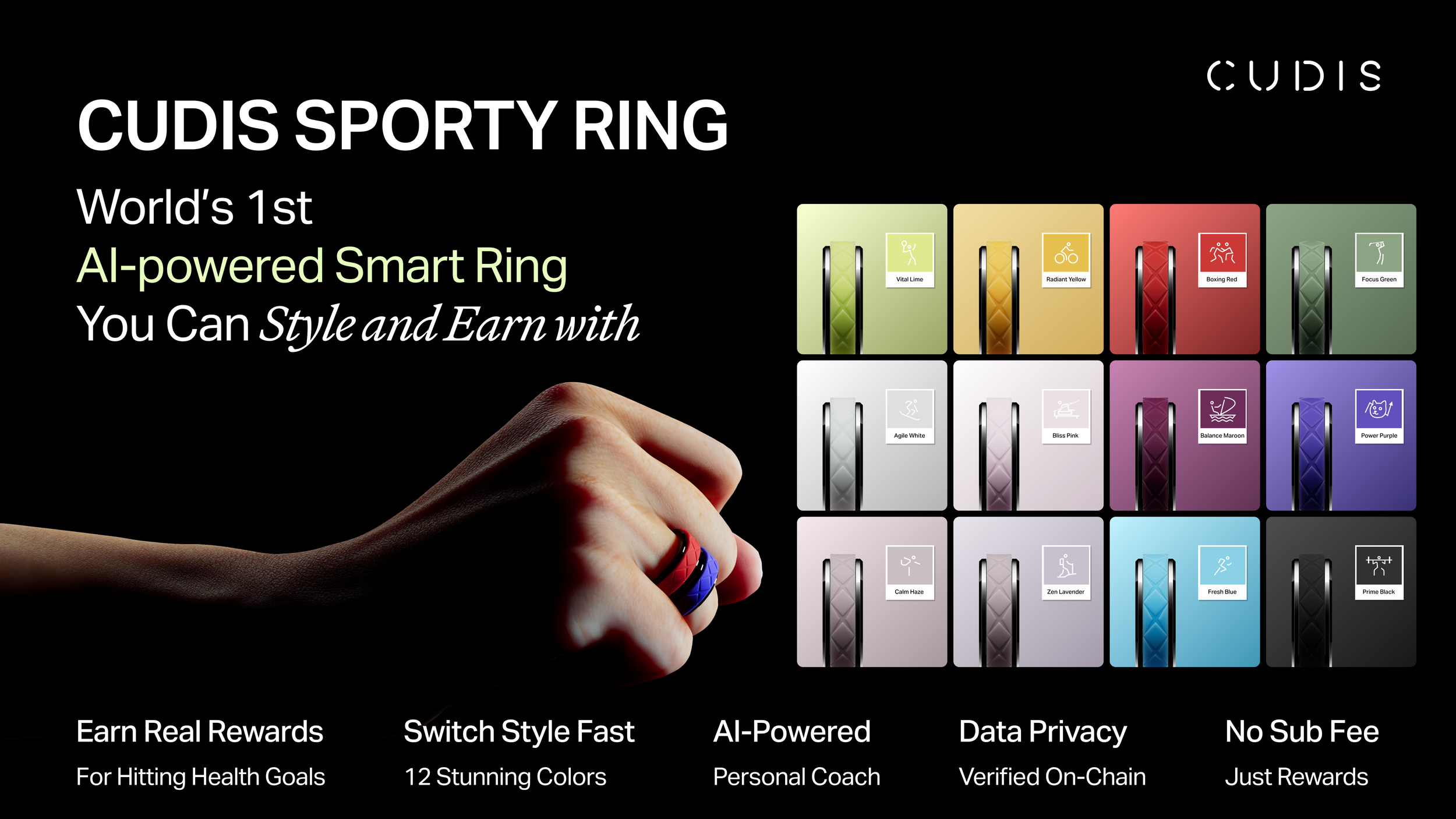
CUDIS Smart Ring that fits your Lifestyle
Unlike many of your competitors, the Series 002 ring completely eliminates the monthly subscription fee. Why was it so important to remove this paywall, and how does the built-in rewards system actually rewards users for maintaining healthy habits?
Honestly, it came down to alignment. With a subscription, the company gets paid regardless of whether the product is actually changing your life. We didn't want that dynamic. One payment, and then our incentives are completely tied to yours. If you're not seeing value, you stop wearing it, and that's on us.
The rewards piece came from a similar place. We asked: What would it look like if the effort you put into your health had some tangible rewards? Health Points are earned through the things that genuinely move the needle: consistent sleep, daily movement, recovery check-ins, and following through on what the AI coach suggests. You redeem them for supplements, telehealth visits, and recovery sessions. Nothing gimmicky. We tried to make the catalog useful enough that it actually feeds back into your health rather than just feeling like a loyalty program. Whether that flywheel clicks for people, that's something we're still learning from our users every day.
The AI Agent Coach integrated into the Series 002 doesn’t just track data; it looks for pattern recognition like declining HRV or poor sleep trends. How does this generative AI transform raw data into actionable, preventative lifestyle adjustments?
Pattern recognition over time is where the real value lives. A single night of poor sleep is noise. Three weeks of declining HRV trending alongside reduced activity and later bedtimes is a signal, and it's a signal the AI can catch before you consciously notice anything is wrong. The coach doesn't just flag the pattern; it builds a specific response and actionable daily health plan. Adjust your bedtime window. Add a recovery day. Try this breathing protocol for stress. And if the pattern suggests something that needs clinical attention, it routes you directly to the right provider. We want the ring to be the earliest warning system you've ever had access to.







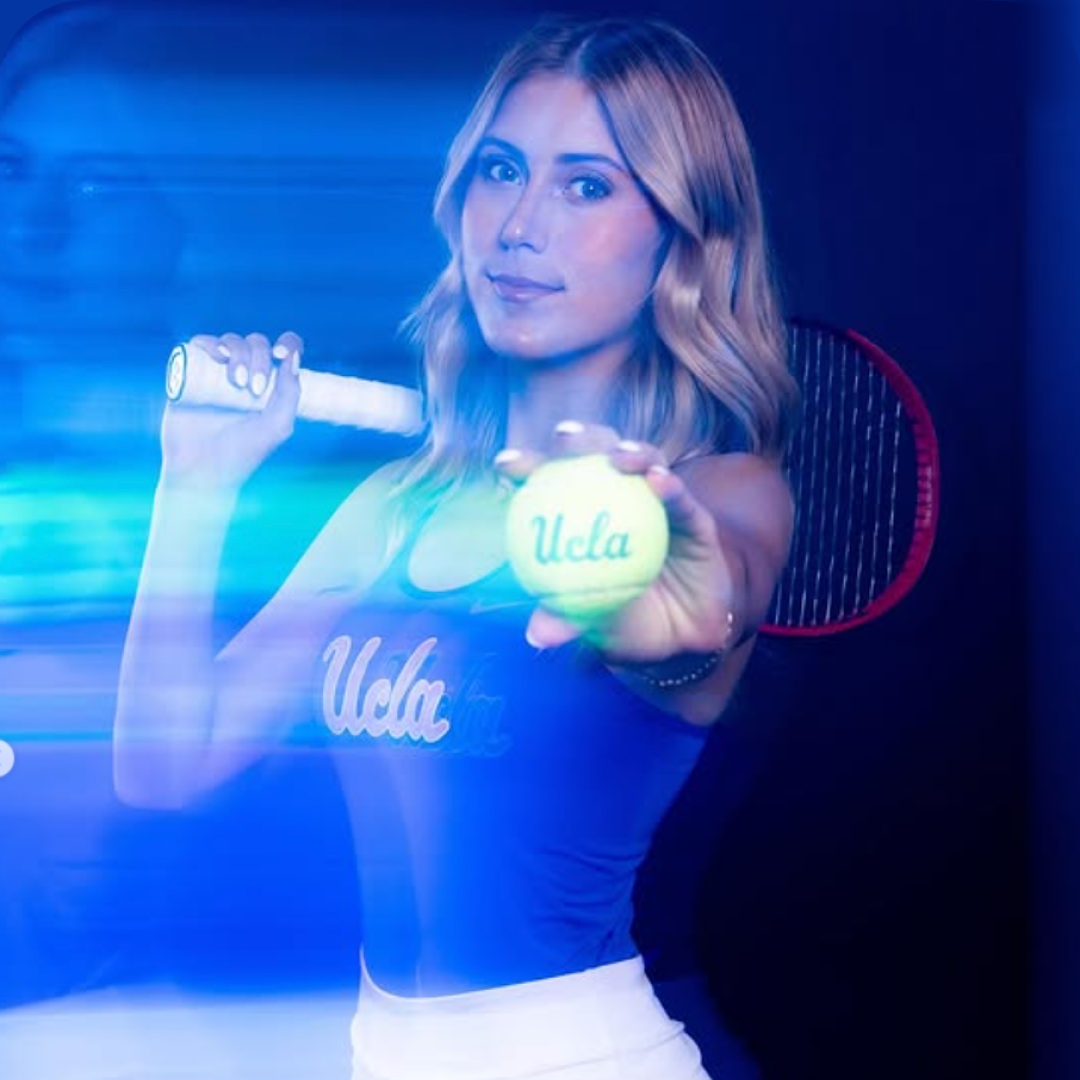
You have formed strategic partnerships with high-profile luxury brands like Lamborghini and Roger Dubuis, as well as over 50 Olympians. How have these elite athletes and luxury partnerships influenced the design, performance tracking, and overall brand identity of the Series 002?
Working with 50+ Olympians gave us real-world stress testing that no lab can replicate. These athletes push their bodies to extremes and they're ruthless about what actually works as they don't have patience for gadgets that aren't accurate or durable. That feedback shaped our sensor calibration, our recovery algorithms, and our durability standards. The Lamborghini and Roger Dubuis partnerships pushed us on the design side because those brands have an obsessive relationship with precision manufacturing and aesthetic detail that raised our bar significantly. The result is a ring that performs as a smart device and wears as a luxury accessory.
With features catering to both professional athletes and everyday wellness enthusiasts, how do you ensure the user experience remains intuitive, engaging, and not overwhelming for the average consumer?
The philosophy is: give people one number to focus on. Not twenty metrics, not a dashboard full of charts but one clear signal that synthesizes everything. For us that's CUDIS Age and your daily Vitality Score. If those are moving in the right direction, you're winning. The AI coach handles the complexity underneath, surfacing only what's relevant to you in that moment. A professional athlete might want to go deep on zone training and HRV trends. Someone who just wants to sleep better and feel less stressed gets a completely different experience: simple, encouraging, and actionable. The ring learns what level of detail you actually engage with and adjusts accordingly. GR8T
As we wrap up this illuminating conversation, we want to extend our deepest gratitude to Edison Chen for sharing his vision with us. By bringing together AI, advanced biometrics, and a genuine commitment to data ownership, he is doing more than building a remarkable smart ring — he is redefining what it means for technology to truly work for the people who use it. The Series 002 is a testament to what happens when innovation meets a real belief that your health data should make your life better, not someone else's business model.
Photos Courtesy of CUDIS
Instagram: CUDIS
Buy Online: https://www.cudis.xyz/