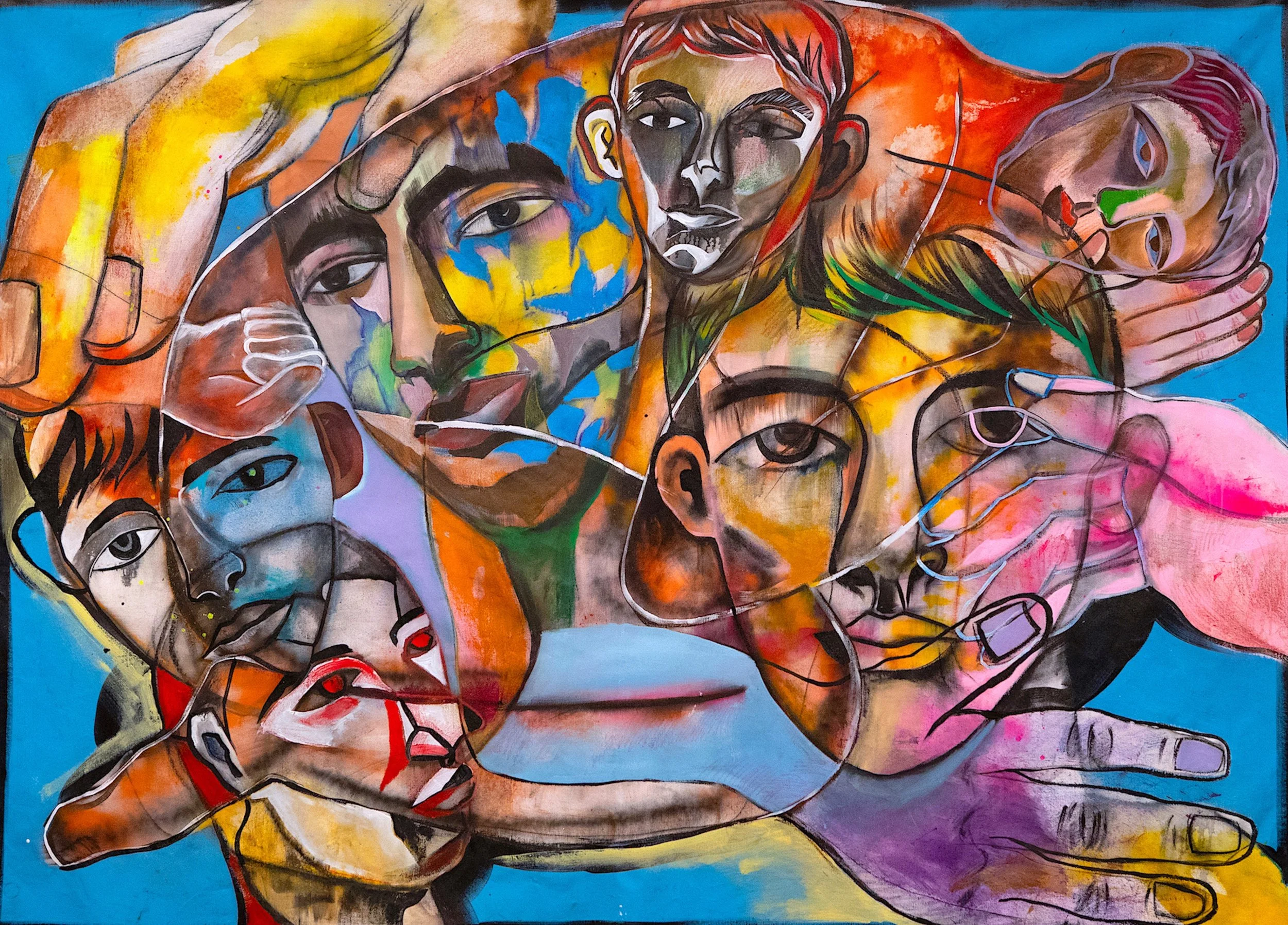
Fragments of Identities by Jun Yang
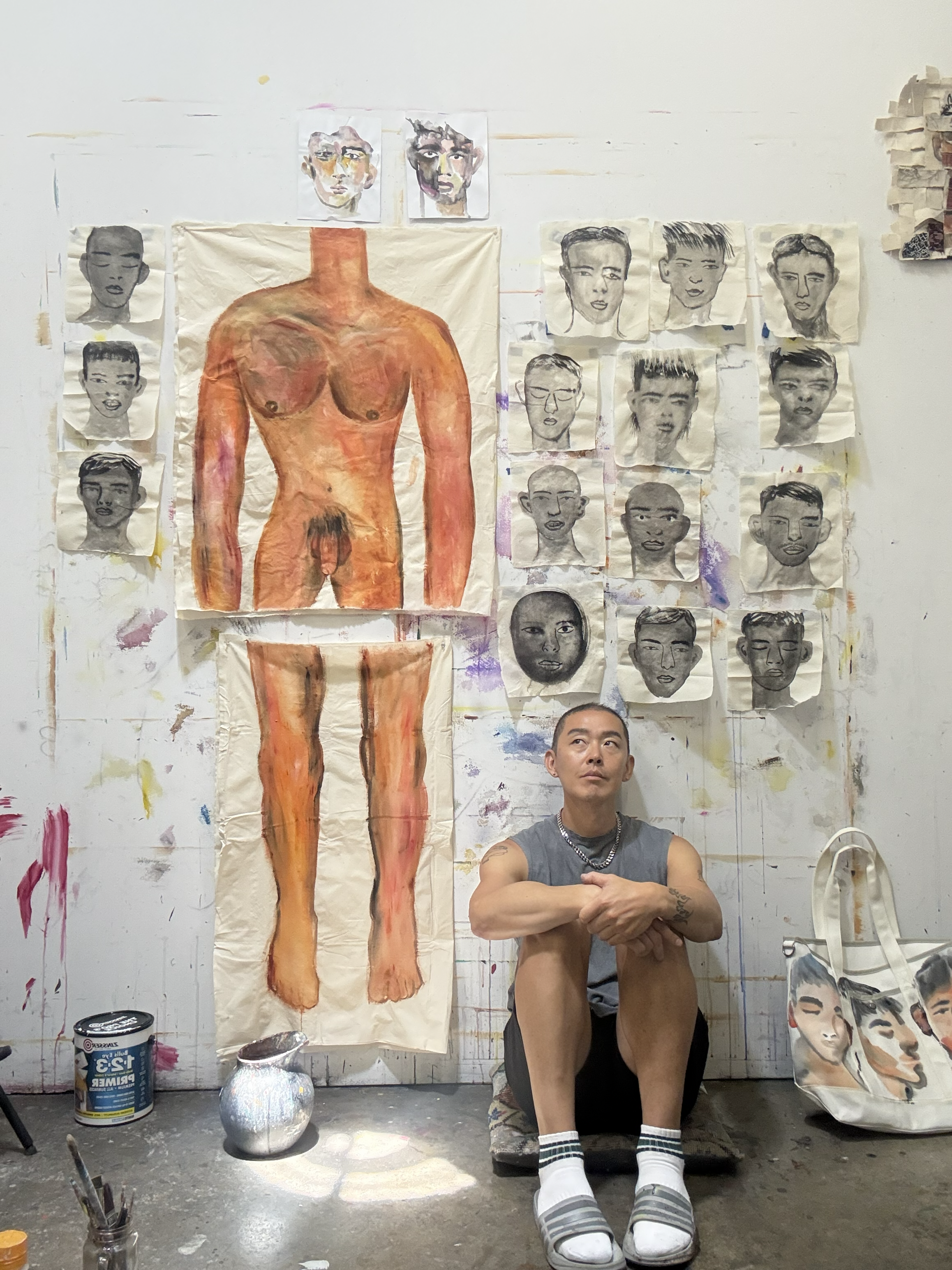
For San Francisco-based multidisciplinary artist Jun Yang, art is more than a visual language—it is a space for memory, healing, identity, and connection. Born and raised in Seoul, Jun has developed an evocative practice spanning large-scale painting, textile-based soft sculpture, ceramics, mixed media, and site-specific installation, creating work that exists at the intersection of cultural heritage and contemporary queer expression.
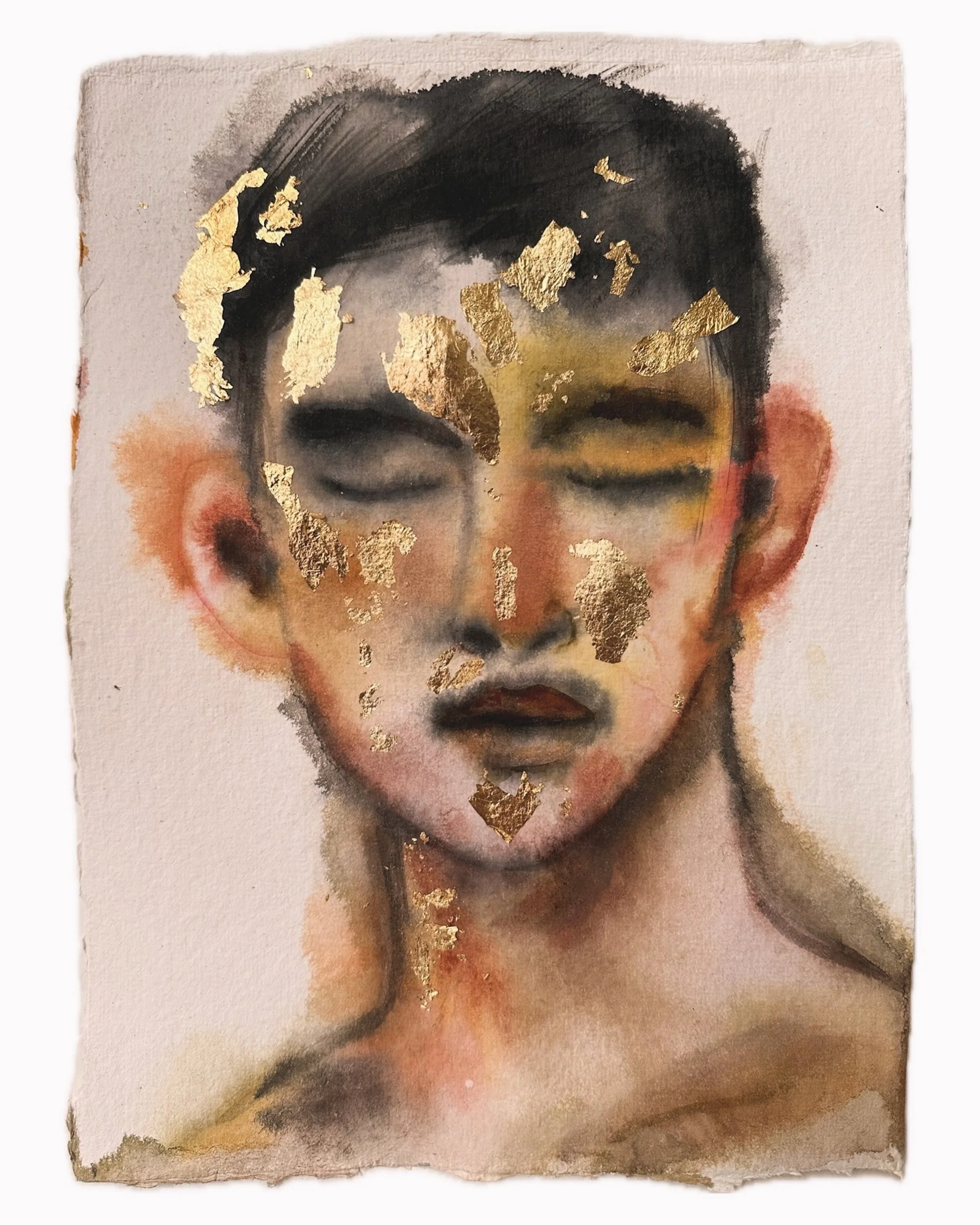
Rooted in the lived experience of a queer Korean immigrant, Jun’s work explores migration, grief, resilience, belonging, and the ever-evolving relationship we have with our bodies. Drawing from Korean visual traditions such as MinHwa (민화) and the vibrant colors of Dan Chung (단청), Jun reimagines familiar cultural motifs through a contemporary lens—transforming them into celebrations of queer embodiment, liberation, tenderness, and joy.
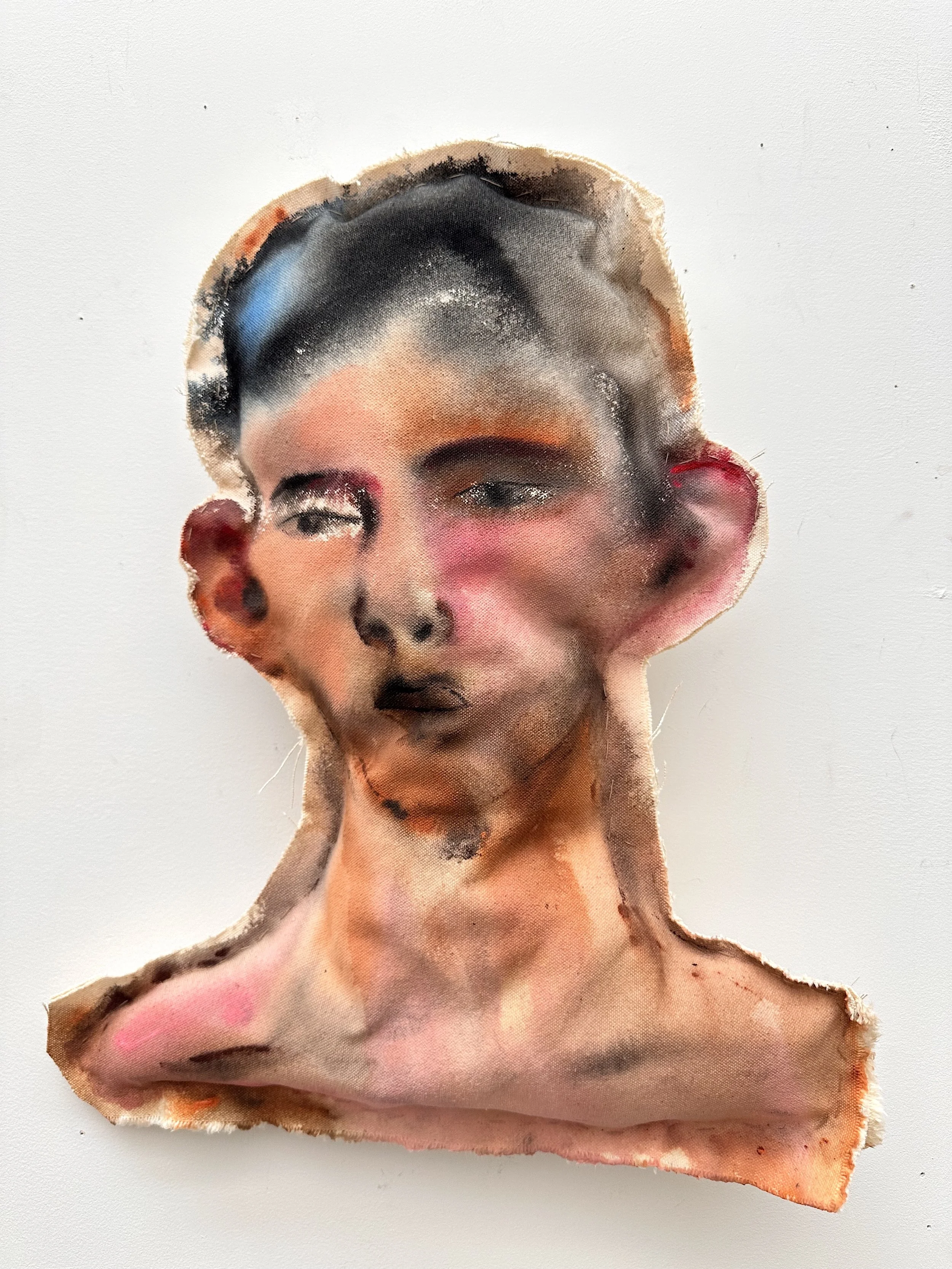
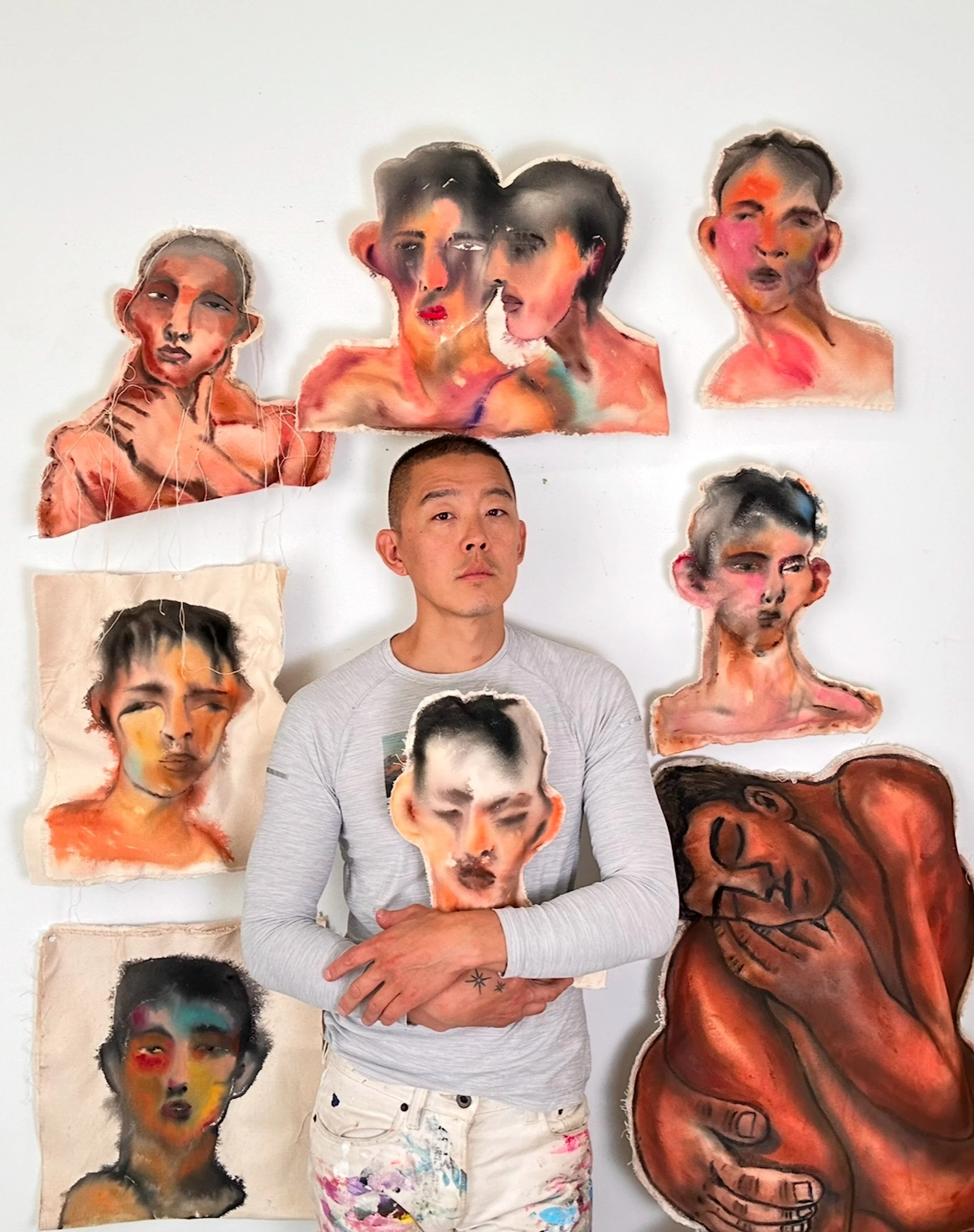
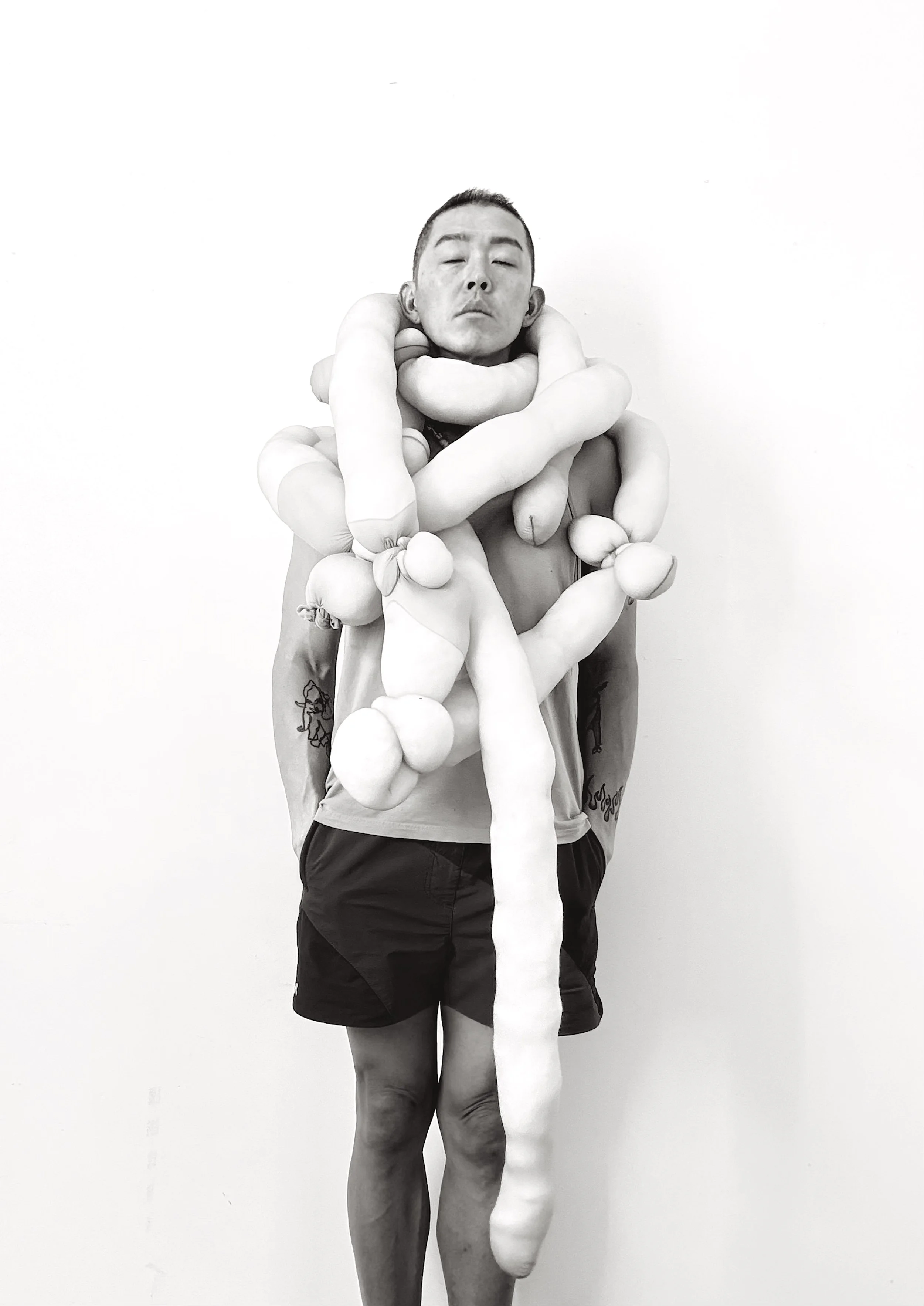
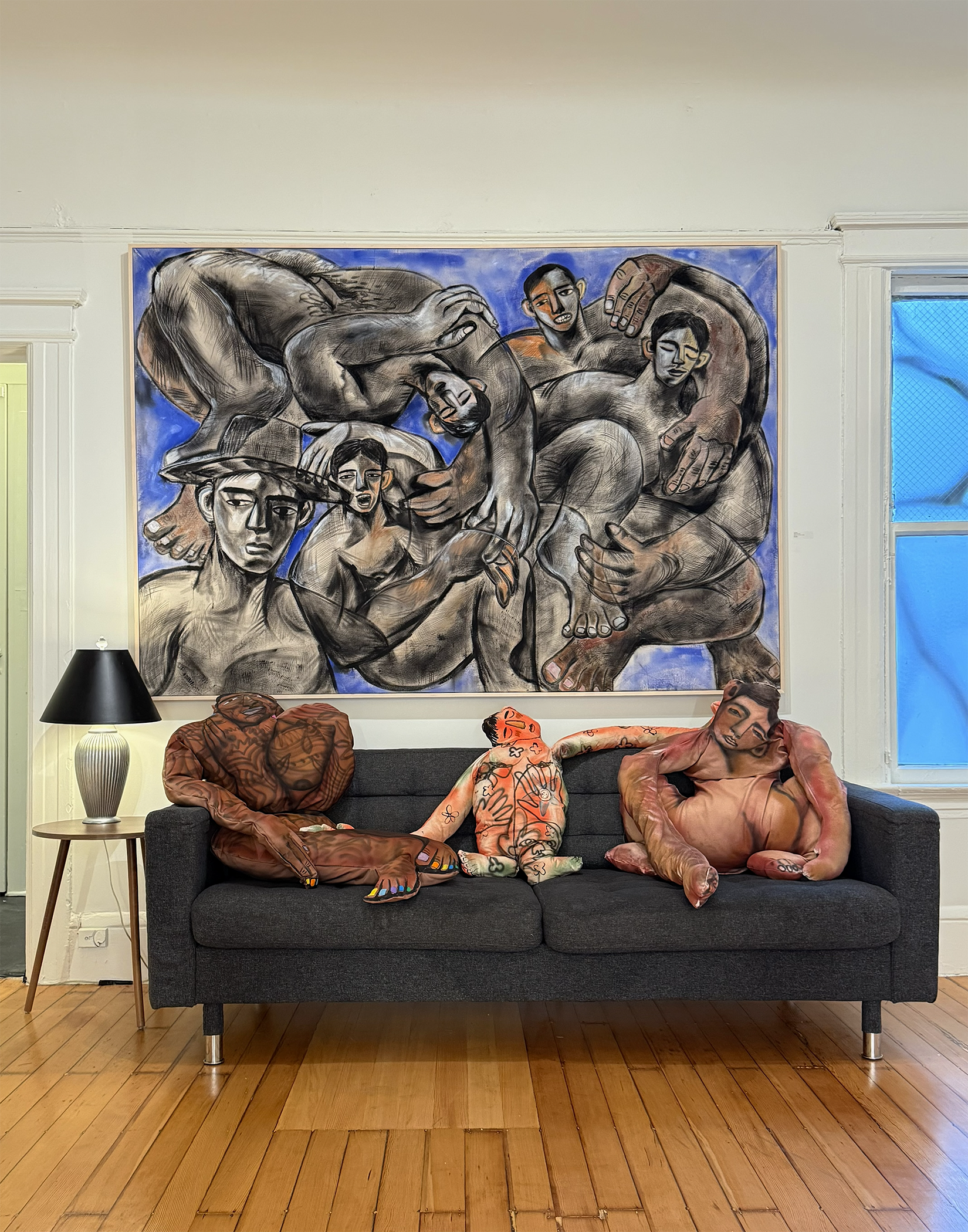
Materials play an equally important role in Jun’s storytelling. Hand-stitched textiles, unprimed canvas, clay, and organic forms become vessels for memory and transformation, while interactive soft sculptures invite audiences to touch, hold, and engage. In these moments of physical connection, the artwork becomes more than something to observe—it becomes an invitation to pause, feel, and experience care.
Beyond the studio, Jun’s community-centered practice extends this philosophy through workshops, public projects, and collaborations designed to make creative expression an accessible and restorative experience. With exhibitions and residencies spanning the United States and internationally—including a first museum solo exhibition at the Bakersfield Museum of Art, presentations at the de Young Museum, MOCA Taipei, Kunsthaus Graz, and the Kuandu Biennale, and residencies at Ma’s House, Kala Art Institute, ProArtes Apapacho, and Tofte Lake Center—Jun continues to build spaces where personal history can become collective connection.
At the heart of Jun Yang’s practice is a simple yet powerful desire: to create a sanctuary from lived experience. Through color, texture, form, and the body, Jun gives visibility to stories that have too often been left outside the museum walls, while creating space for audiences to see themselves, feel seen, and reconnect with who they are.
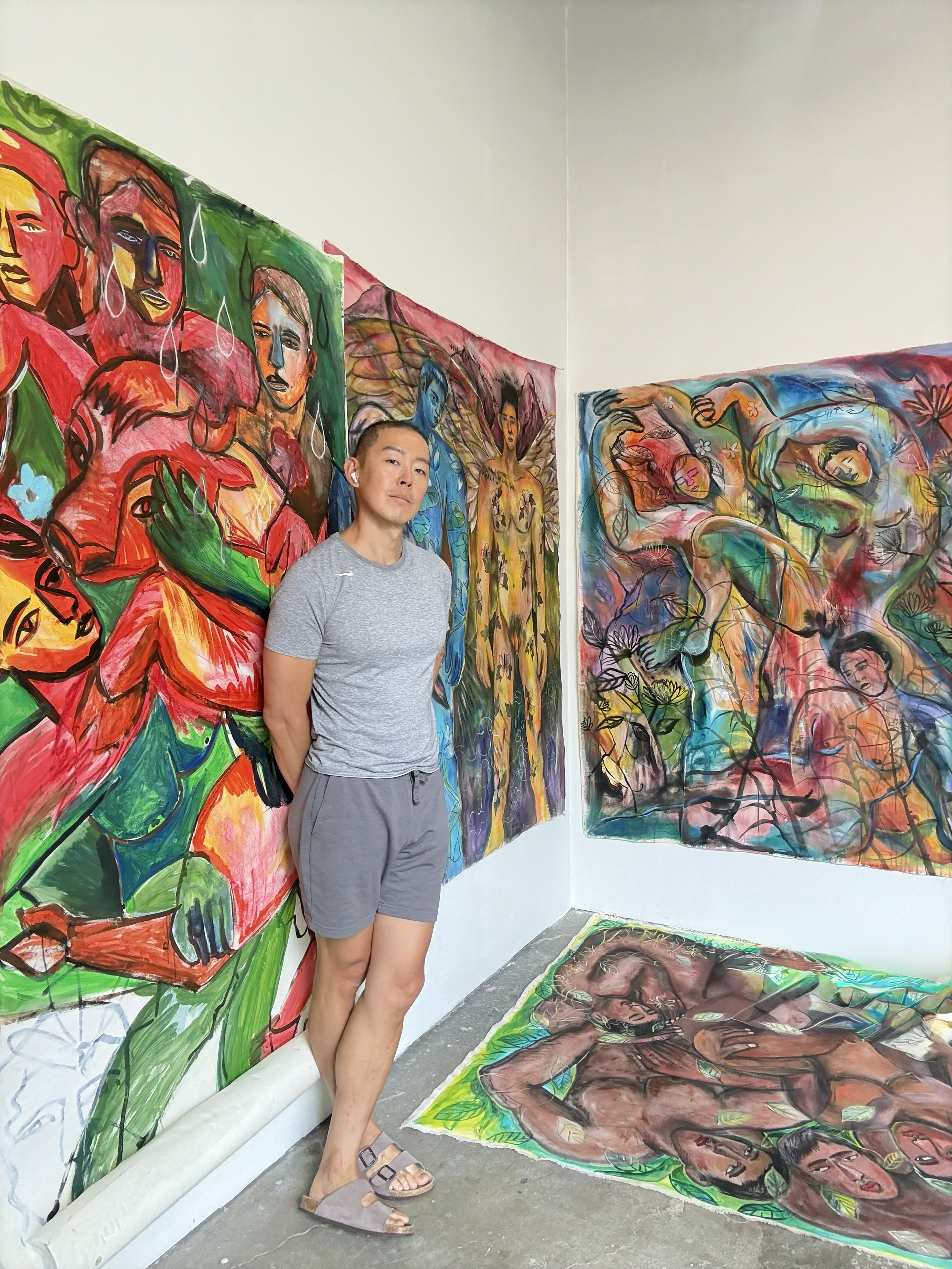
Your practice moves across painting, textiles, soft sculpture, ceramics, and site-specific installation. What draws you to working across so many different mediums, and how does each material allow you to express something that another cannot?
I see materials as living partners with their own weight, memory, and language, especially textiles. Working across all of these mediums gives me a chance to express things I just can't put into words and words can't fully capture on a flat canvas. There's something deeply special about three-dimensional sculptures; that hands-on, tactile process is immensely healing and therapeutic for me. Moving into physical space opens up so many possibilities for interactivity, allowing me to build sensory experiences that trigger a deep sense of calm, rest, and safety for anyone who steps into the room. Painting gives me space to bleed color, layer ink, and capture raw, fluid emotion directly on canvas. Soft sculptures and textiles bring something paint never can; physical weight, softness, and a surface that yields when you touch it or hold it against your body. Ceramics force me to work with raw earth and surrender to the fire, there's a permanence and unpredictability in clay that grounds the softer, more fleeting parts of my practice.
You studied graphic design in Seoul before choosing to pursue an independent artistic path outside the traditional fine-art-school system. How did that decision shape the artist you have become today?
Studying graphic design gave me an eye for composition, space, and visual communication, and learning fundamental painting techniques to build my design portfolio actually gave me the initial push into fine art. But I quickly realized commercial design required compromising my creativity for money, which wasn't my path, so I dropped out to explore the world. Building a fine art language turned out to be completely different from design—I had to unlearn rigid rules and build a practice rooted entirely in my own lived experience, intuition, and constant studio trial-and-error.
Navigating the art world without an academic fine art background or pre-existing connections was definitely not an easy road. But being self-taught outside the institutional system meant I never had to ask for permission to make what I needed to make. Every failure I experienced along the way became a source of strength that gave me real confidence. It made me resourceful, grounded, and deeply accountable to my own story and community rather than market trends.
Your work brings elements of Korean visual heritage, including MinHwa (민화) and the distinctive colors of Dan Chung (단청), into contemporary work. What aspects of Korean visual culture continue to inspire you, and how do you reinterpret them through your own lens?
For a long time, I consciously stayed away from traditional Korean and Asian art. I resented how the Western art world often pigeonholes Asian artists, expecting us to produce a specific, exoticized style, and I wanted to distance myself from typical traditional materials.
Everything shifted after I lost my parents. In that grief, I realized I had never truly honored my ancestors or the sacrifices my family made to protect and nurture us. Reconnecting with my culture became deeply healing; I began noticing the brilliance and intentional beauty in Korean design that I had previously refused to see. Visiting the temple where my mother's ashes rest, I was constantly surrounded by the vibrant, sacred patterns of Dan Chung(단청). I also fell in love with MinHwa (민화) because it was the people's art—painted by anonymous artists for everyday homes, filled with humor, protection, and honest wishes for a good life.
I don't replicate these traditions historically. Instead, I bring those symbols of protection, spiritual resilience, and warmth into my life as a queer Korean immigrant. I use those visual languages to build sacred spaces for queer bodies and chosen family, claiming that our lives, grief, and joy deserve that same ancestral protection and honor.


You describe your work as an ongoing space for healing and reconnection. When you think about the relationship between art and healing, what does that process look like for you personally? Healing in the studio isn't neat or romantic—it can be messy,
Healing in the studio isn't neat or romantic, it can be messy, non-linear, and frustrating when we fall into the trap of comparing our journey to others. That is why nature is such a vital part of my practice; I look to nature as an ultimate provider and a sanctuary where queer bodies can truly rest and heal.
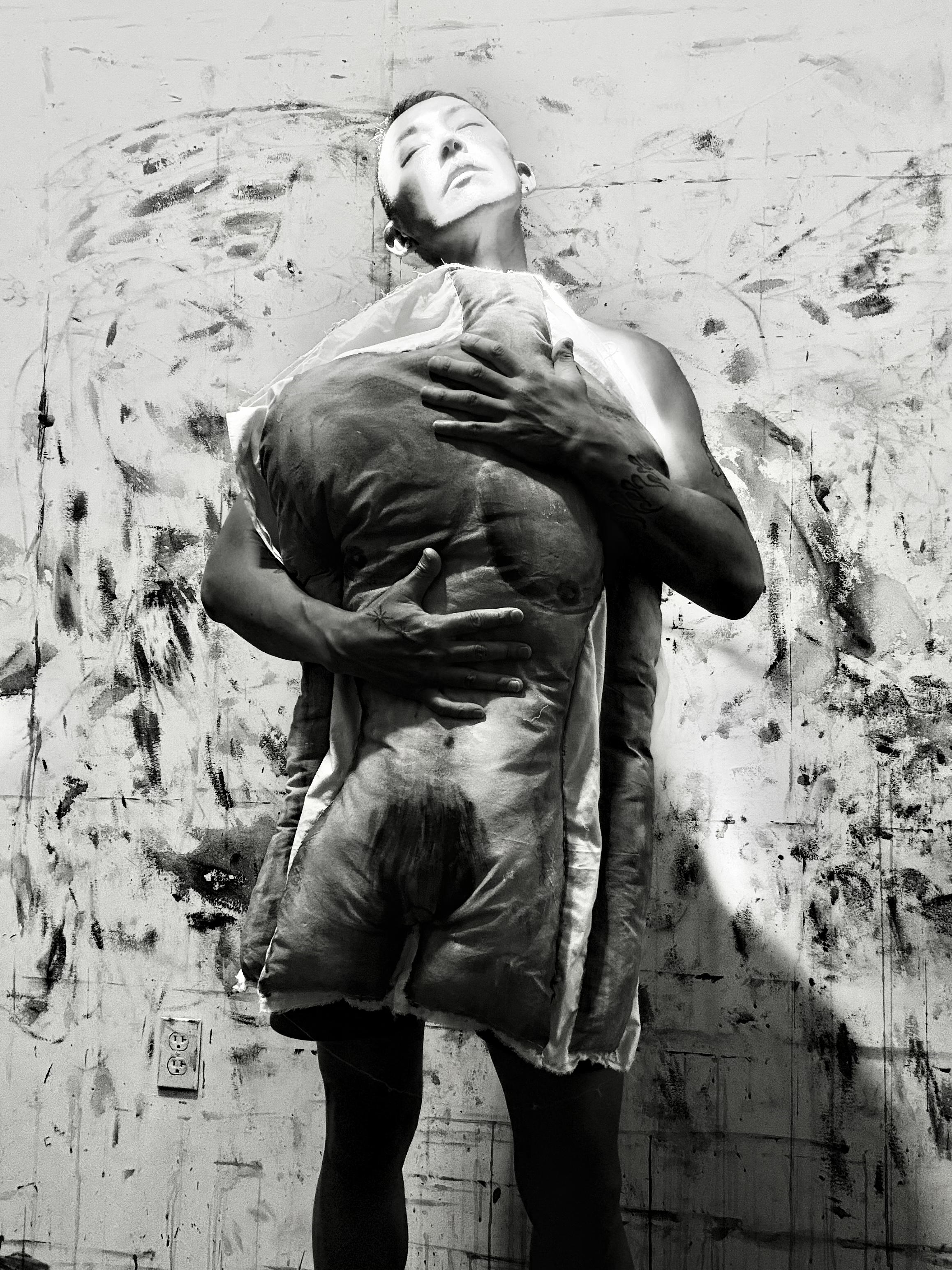
It is quiet, repetitive, and often heavy physical labor. When I created soft sculptures for my younger self, I painted my own face onto them—not to depict exact bone structure, but to evoke the raw weight of carrying so many complex emotions. I wanted to give that younger version of myself love, hug him, and tell him, "You are enough, and you deserve love."
It takes hours of hand-stitching fabric, pouring washes of paint, or shaping clay until my hands are tired. That physical repetition gives my body a way to process grief, displacement, and memory when words fall short. Making art creates a container where I can face hard truths, honor where I've been, and give my past and present self a quiet place to rest. It turns pain into something tangible that offers real warmth to someone else.
The body is central to your practice—as a place that holds memory, trauma, rest, transformation, and joy. How has your understanding of the body evolved through your work? I feel the body mainly as a site of displacement, inherited trauma, and survival. But over years of making work, holding materials, and creating physical installations, my view completely shifted. I started to see the body as a place capable of immense softness, deep rest, and quiet joy. My work taught me that our bodies aren't just vessels carrying old wounds; they are living spaces where we can actively practice care, transformation, and self-belonging every day.
As a queer Korean immigrant, your work explores displacement, grief, resilience, and belonging. How do your lived experiences inform the stories you choose to tell through your art?
My lived experience isn't just a static story or something I write about in an artist statement. It's a living archive and my daily documentation as a visual artist. My emotional landscape directly shapes my work every single day; when I am feeling joy, the work naturally turns into vibrant and when I'm sad, my work bleeds. Lived experience is the soil everything grows from.
Navigating life across different languages, countries, and systems continuously shapes how I understand space, boundary, and safety. The stories I tell come directly from the felt realities of my life—the quiet weight of being far from my ancestral roots, the deep grief of loss, and the incredible beauty of meeting my chosen family here in San Francisco. I make art to document how we survive, how we hold each other, and how we build a home out of love, vulnerability, and resilience when the world feels uncertain.
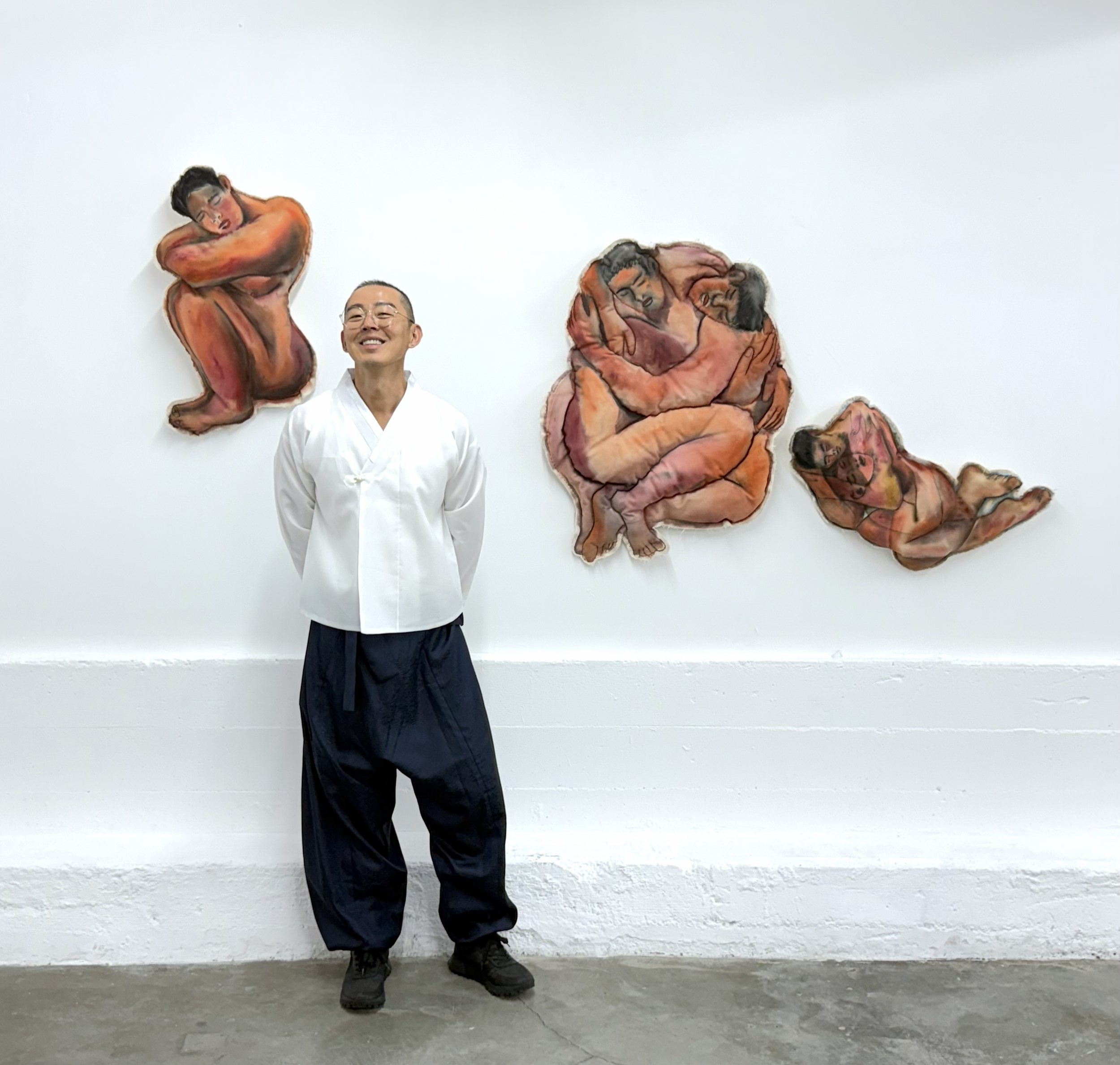
You often depict queer bodies of color with a sense of tenderness, vulnerability, and joy. What do you hope these representations communicate to people who may rarely see themselves reflected in museum and gallery spaces?
I want to challenge conventional beauty standards, societal biases, and harsh cultural norms. Growing up, and even through much of my adult life, I rarely saw queer POC immigrants or bodies of color represented in institutional spaces. When I make these large pieces, people cannot ignore them—they demand attention and unapologetically take up space.
Historically, our stories were framed strictly through trauma, exoticism, or struggle. In my work, I depict bodies as intertwined using unconventional shapes and forms to celebrate queer joy and pride. At the same time, My figures represent the painful reality feeling of not being enough and misunderstood which leaves real tension in our physical bodies. Ultimately, I want to honor the full diversity of our beauty across all shapes and colors. I hope anyone entering the space feels seen, valued, and reminded that they belong in these rooms fully as they are.
Your textile sculptures are intentionally interactive, inviting audiences to touch, hold, and physically engage with them. Why is touch so important to the experience of your work?
Originally, I started making these soft sculptures out of a deep somatic and spiritual need to connect with my younger self. I wanted to create a physical vessel, a bridge I could hold directly against my chest to give that younger version of me love and healing. Through that process, I realized how deeply other people resonated with the work. Fabric, clothes, pillows, and bedsheets are so close to our daily lives; they touch our skin every day and carry our memories and personal histories. Sharing these soft, touchable materials became a way to connect people to one another, offering the same deep sense of comfort and healing that saved me in the studio.
Your use of hand-stitched textiles and unprimed canvas often incorporates memories and younger versions of yourself. How does material itself become a vessel for memory in your practice?
Unprimed canvas is completely honest—it holds every mark, line, spill, and wrinkle. It remembers everything that happened to it. Hand-stitching is inherently slow, where every single stitch takes time, patience, and physical intention. When I sit and stitch for hours, it feels like I am mending my broken memories together, having a quiet conversation with myself while reflecting on the hidden labor of all the people who work tirelessly behind the scenes. The materials become physical vessels that hold those memories safely, allowing me to look at them, honor them, and integrate them fully into who I am today.


Your ceramic work, including pieces that developed during your residency in Mexico City, explores ideas of hybridity, care, and letting go. What has working with clay taught you about control, transformation, and unexpected outcomes?
Clay taught me how to let go. You can spend days shaping a form with your hands, giving it all your care and attention, but once it goes into the kiln, you have to hand it over to the fire. Working with local clay in Mexico City really grounded that lesson for me. It showed me that cracks, unexpected color changes, and shifts in texture aren't failures; they are the story of the material living its own life. Clay continuously reminds me that true beauty often lives in the parts you couldn't control.
Your community workshops and public projects extend your practice beyond the studio. What have you learned from creating art collaboratively with communities, and how has that exchange influenced your own work?
Working directly with the community keeps my art honest and rooted. When I facilitate workshops, whether we're stitching together or building clay forms, all the pretentious talk about art falls away. I'm reminded that art is fundamentally a tool for human connection, sharing space, and collective healing. Seeing people open up, share their own stories, and find comfort through making things together fills my own studio practice with purpose. It reminds me who I am making work for.

You have participated in residencies including Ma's House on the Shinnecock Reservation, ProArtes Apapacho in Mexico City, Kala Art Institute, and Tofte Lake Center. How have different places and communities changed the way you think about space, memory, and belonging?
Each residency has fundamentally shifted how I listen to land, history, and community. Being at Ma's House on Shinnecock land deeply inspired me through its witness to Indigenous resilience and history; spending those weeks collaborating and sharing space with other artists was an incredible learning opportunity. Immersed in the quiet woods at Tofte Lake, I found a different kind of growth in solitude and through meaningful connection with writers and musicians, which broadened how I think about creative community.
I truly consider these residency opportunities to be my fine art education. Every time I participate in one, connecting with curators, artists, and writers allows me to learn so much. I feel genuinely blessed to have these experiences and to build lasting, beautiful relationships with such amazing people.
Your work has been presented in institutions and exhibitions ranging from the Bakersfield Museum of Art to the de Young Museum, MOCA Taipei, Kunsthaus Graz, and the Kuandu Biennale. As your work reaches different audiences and cultural contexts, does its meaning change for you?
Institutional support and project funding transformed my entire practice. Receiving stipends and financial backing from museums gave me the freedom to take immense creative risks, allowing my work to evolve from traditional painting into fully immersive, multidisciplinary installations that merge site-specific murals, mixed media, paper cutouts, and soft sculptures.
These funded opportunities turned museum shows into complete ecosystems of community connection. Having institutional resources backed by curators and docents enabled Spanish-language tours, artist talks, and video interviews, building deep relationships with local communities. This accessibility brings people into the museum who traditionally haven't felt included or didn't have the time, money, or formal background to access these spaces. For me, visibility at this level offers tangible hope to emerging artists, immigrants, and queer folks.
While the heart of my work remains steady, its impact grows with every space it occupies—acting as a bold claim to belonging in Western institutions, and sparking quiet dialogues around diaspora and shared memory internationally as communities bring their own lived stories into the space.
Looking ahead, what do you want to explore next in your practice? Are there new materials, stories, or forms of community engagement that you feel are beginning to emerge?
I want to push my site-specific work into an even larger, more immersive scale combining architectural soft sculpture with soundscapes, ceramics, and public gathering spaces. I'm really interested in building public works such as chairs, hugging figures or tables that aren't just static sculptures to look at, but permanent community sanctuaries where people can gather, rest, and feel held. In the studio, I'm continuing to experiment with raw materials, pushing boundaries, and trusting wherever the work needs to go next to keep creating space for healing and connection. GR8T